RismadarVoice Reporters, August 29, 2026
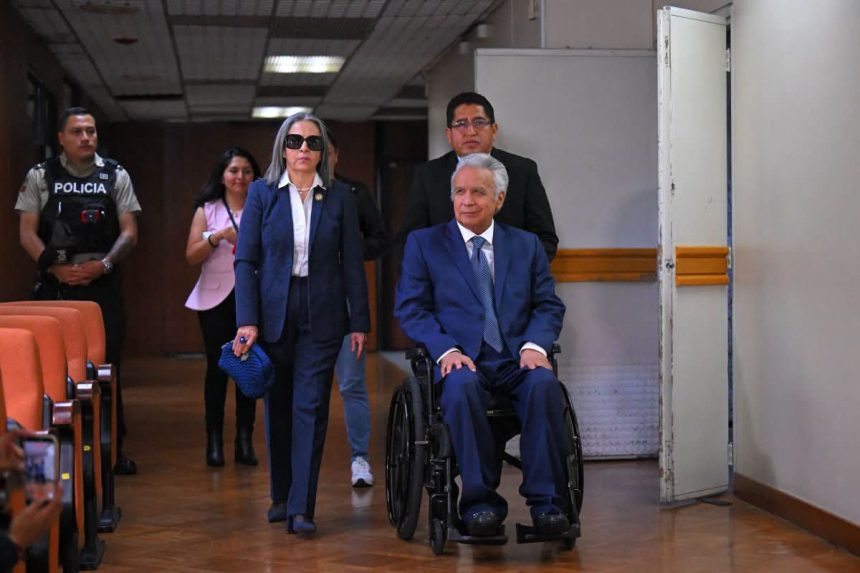
An Ecuadorian court has sentenced former President Lenin Moreno to five years in prison after finding him guilty of bribery in a corruption case linked to the construction of the country’s largest hydroelectric power project.
Moreno, who served as Ecuador’s president from 2017 to 2021, was also permanently barred from holding public office in the future following the ruling announced by the country’s public prosecutor’s office.
The case centres on allegations surrounding the Coca Codo Sinclair hydroelectric plant, which began operations in 2016 but has faced technical challenges since its completion.

The Ecuadorian Attorney General’s Office launched an investigation in March 2023, alleging that Moreno, members of his family, and local and Chinese business partners were involved in a corruption network connected to the project.
During the verdict hearing, Judge Manuel Cabrera, who led the tribunal, said Moreno’s actions matched the prosecution’s allegations of bribery involving a public official.
Prosecutors alleged that Chinese state-owned company Sinohydro paid about $76.1 million in bribes between 2009 and 2018 through fraudulent consulting contracts.
Moreno’s wife, Rocio Gonzalez Navas, his daughter, two brothers and their spouses were also convicted in the case and sentenced to two and a half years in prison. Cai Runguo, China’s former ambassador to Quito, was handed a five-year sentence.
Investigators alleged that the funds were transferred through overseas accounts and shell companies before reaching Moreno’s family members and associates. Prosecutors said Moreno and close relatives received more than $1 million while he served as Ecuador’s vice president between 2007 and 2013.

Moreno has repeatedly denied the allegations, saying he had no involvement in signing or supervising contracts related to the hydroelectric project.
During the court proceedings, he maintained that investigators were targeting the wrong individuals and argued that attention should be directed towards those who signed the contracts.
The former president returned to Ecuador from Paraguay to face trial after the corruption investigation progressed.
The ruling marks another major corruption case involving a former Ecuadorian leader and adds to ongoing debates over accountability and governance in the country.