

RismadarVoice Reporters, June 2, 2026
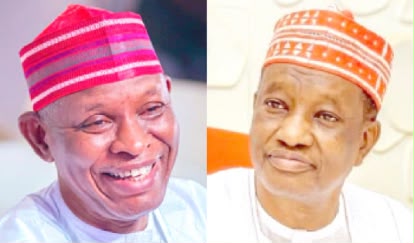
As preparations for the 2027 elections intensify, political analysts have continued to express differing views on the prospects of the Nigeria Democratic Congress (NDC) in the Kano State governorship election following the emergence of Aminu Abdussalam Gwarzo as the party’s candidate.
Speaking on the development, Kano-based political analyst, Hassan Ibrahim said the state’s political history shows that incumbency does not always guarantee victory, noting that Kano voters have a tradition of voting out sitting leaders when they believe a better alternative exists.
According to him, the 2027 governorship contest between Governor Abba Kabir Yusuf and Gwarzo could be highly competitive.
“In Kano politics, one cannot say because someone is an incumbent, he will automatically win. Kano people are used to defeating incumbents. If they feel another candidate is better, they can vote him out,” Ibrahim said.

He commended the NDC’s decision to adopt a consensus process in selecting its candidates, describing the move as a strategic step that helped the party avoid internal conflicts ahead of the election.
Ibrahim explained that the party, which recently witnessed an influx of influential politicians and defectors from other political platforms, faced the challenge of managing competing ambitions among its members.
According to him, the leadership of the party, led by Rabiu Musa Kwankwaso in Kano, successfully persuaded several aspirants to step down in the interest of party unity.
“So for Kwankwaso to be able to manage those ambitions and egos of the defectors and settle that issue is a very big achievement,” he said.
The analyst described Gwarzo as a seasoned politician with extensive experience in public service, having previously served as a local government chairman, commissioner and deputy governor.
He noted that Gwarzo’s political profile and visibility across the state make him a formidable contender in the race.
However, Ibrahim maintained that the election remains difficult to predict.
“To say he will defeat the incumbent is difficult. It is a 50-50 situation. The incumbency factor is there, but Kano voters can decide otherwise,” he stated.
He added that the influence of the Kwankwasiyya movement and the position of its leader, Rabiu Musa Kwankwaso, would play a significant role in determining the outcome of the election.
“There are also undecided voters. People who are not yet sure where they will go. That group will be very important in deciding the election,” he said.
Offering a contrasting view, another political analyst, Kabiru Ojo, argued that the NDC faces an uphill task in its quest to win the Kano governorship election.
Ojo attributed the party’s challenges to internal divisions and shifting political alliances within the state.
According to him, the political structure associated with the Kwankwasiyya movement has become fragmented, with some supporters remaining loyal to Governor Yusuf while others have aligned with different political parties.
“As for the NDC’s chances of winning the gubernatorial election, it is very narrow,” Ojo said.
He noted that some supporters of former APC governorship candidate Nasiru Yusuf Gawuna were dissatisfied with his emergence as the party’s candidate for Kano Central Senatorial District rather than the governorship ticket.

According to Ojo, this development has created pockets of discontent within sections of the party and among some political stakeholders.
He also argued that some party members question whether Gwarzo possesses the political influence required to secure victory in a highly competitive election.
Despite these concerns, Ojo acknowledged that Gwarzo’s emergence was achieved through a consensus arrangement accepted by party stakeholders.
“Choosing Gwarzo was not an imposition. It was a collective agreement by all members of the NDC party,” he said.
Both analysts agreed that the 2027 Kano governorship election is likely to be closely contested, with voter sentiment, political alliances and party cohesion expected to play crucial roles in determining the eventual outcome.