

RismadarVoice Reporters
October 11, 2026
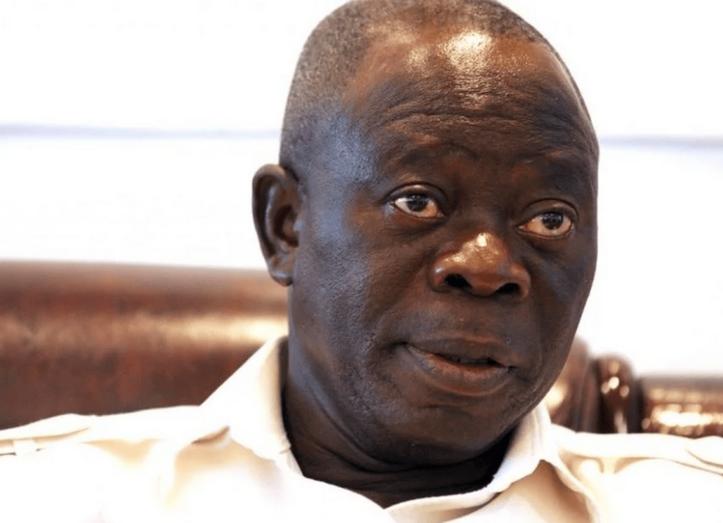
Former Edo State Governor and Senator representing Edo North, Adams Oshiomhole, has accused the Minister of Works, David Umahi, of alleged bias in the allocation of funds for federal road projects, questioning the Federal Government’s continued investment in new roads while existing highways remain in poor condition.
Oshiomhole made the allegations during a podcast interview circulated on social media, where he revisited his disagreement with Umahi over budgetary allocations, road maintenance priorities and the management of federal infrastructure projects.
The senator maintained that the rehabilitation of deteriorating federal highways should receive greater attention before additional resources are committed to constructing new roads.
He argued that the Ministry of Works had a responsibility to assess the condition of existing infrastructure and direct available funds towards projects requiring urgent intervention.
“As a manager, you do not keep on building new houses when you cannot maintain the houses you already have. It is common sense,” Oshiomhole said.

The former governor explained that his earlier objections during a National Assembly budget hearing were consistent with his constitutional responsibility as a lawmaker to scrutinise government expenditure and demand accountability.
According to him, legislative oversight should not be interpreted as political opposition, particularly when questions concern the management of public funds and the delivery of essential infrastructure.
Oshiomhole also criticised what he described as Umahi’s tendency to invoke President Bola Tinubu’s name when responding to questions about decisions taken by the Ministry of Works.
“Ministers should not drop his name to cover up their own mess,” he said.
He maintained that ministers must accept responsibility for the decisions and performance of their respective ministries rather than rely on their association with the President to justify administrative actions.
The senator argued that Tinubu could not reasonably be expected to supervise every federal ministry personally, stressing that appointed officials were responsible for implementing government policies and ensuring effective service delivery.
Oshiomhole further questioned proposals to introduce additional road projects for consideration by the Federal Executive Council when several existing highways remained in need of rehabilitation.
He said the government should establish clear priorities based on infrastructure conditions, available resources and the immediate needs of road users.
The lawmaker also raised concerns about the selection and performance of contractors handling federal road projects.
He maintained that the Ministry of Works should ensure that contractors awarded government projects possess the necessary capacity to execute them satisfactorily and within agreed specifications.
Turning to the Federal Roads Maintenance Agency (FERMA), Oshiomhole called for stronger coordination between the agency and the Ministry of Works to improve maintenance planning and prevent further deterioration of federal highways.

He suggested that the ministry should make greater use of reports from federal directors of works across the country’s geopolitical zones to identify roads requiring urgent attention.
According to him, such assessments would enable the ministry to establish informed maintenance priorities without requiring the minister to personally inspect every affected road.
Oshiomhole insisted that effective infrastructure management required a balance between developing new roads and preserving existing ones, warning that inadequate maintenance could undermine the value of previous government investments.
His allegations represent his assessment of the ministry’s spending priorities and do not, by themselves, establish wrongdoing or discriminatory allocation of funds.
The claims also raise questions about how the Federal Government balances road construction, rehabilitation and routine maintenance within its infrastructure budget.