RismadarVoice Reporters, July 28, 2026
The Federal Government of Nigeria has demanded the urgent action from South Africa to end recurring attacks on Nigerians and other African nationals, disclosing that 98 Nigerians have been killed in mob and hate-related incidents in the country since 2022.
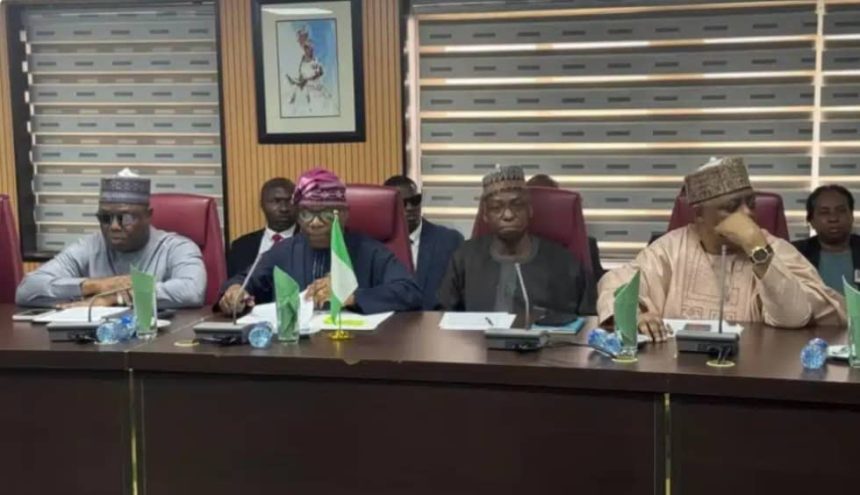
The Minister of State for Foreign Affairs, Ambassador Sola Enikanolaiye, made the demand in Abuja on Monday while receiving South Africa’s Minister of International Relations and Cooperation, Ronald Lamola.
Lamola was sent to Nigeria as a special envoy by South African President Cyril Ramaphosa amid growing diplomatic tension over repeated attacks on foreign nationals.

The envoy delivered a message from Ramaphosa to President Bola Tinubu before holding talks with senior Nigerian officials led by Enikanolaiye.
Enikanolaiye said Tinubu directed the meeting to allow both countries to frankly discuss what he described as persistent “Afrophobic attacks” against Nigerians and other African migrants in South Africa.
“We have seen a pattern that has become a concern to the Nigerian government,” he said.
The minister cited outbreaks of anti-migrant violence dating back to 1995 and said official records showed that 98 Nigerians had been killed in mob attacks and hate-related violence in South Africa since 2022.
He warned that the continued attacks could damage the long-standing strategic relationship between Africa’s two largest economies.
Enikanolaiye urged Pretoria to take immediate and concrete measures to protect Nigerians and other foreign nationals legally residing in the country.

The minister disclosed that the Federal Government had evacuated more than 1,500 Nigerians from South Africa following previous attacks.
He described receiving some of the evacuees as an emotional experience, noting that many returned home without their possessions.
“I shed tears when I received the first batch of evacuees. I saw children, women and the elderly returning home with almost nothing after their properties had been looted and destroyed. That is not the Africa we want,” he said.
Enikanolaiye said several victims were lawful residents and raised concerns over the alleged failure of South African security personnel to intervene during some attacks.
He argued that such incidents raised questions about state responsibility and the safety of foreigners living in South Africa.
The minister stressed that Nigeria would not defend citizens involved in drug trafficking or other criminal activities.
He, however, insisted that suspects must be arrested and prosecuted through the legal system rather than subjected to mob violence.
“Nigeria will not support drug traffickers or any criminal activity, but those accused of crimes must be treated in accordance with the rule of law, South Africa’s Constitution and international human rights standards,” Enikanolaiye said.
He maintained that criminal allegations should not be used to justify attacks on Nigerians and other migrants.
Enikanolaiye reminded the South African delegation of Nigeria’s role in the struggle against apartheid and the subsequent cooperation between both countries.
He recalled their collaboration in transforming the Organisation of African Unity into the African Union and promoting the New Partnership for Africa’s Development.
Despite the current tension, the minister reaffirmed Nigeria’s commitment to maintaining cordial relations with South Africa.
He expressed hope that continued dialogue would rebuild confidence, strengthen bilateral relations and protect the principle of African solidarity.
Responding, Lamola said his visit was aimed at reaffirming the historic friendship between Nigeria and South Africa while addressing concerns over violence against foreign nationals.
He acknowledged Nigeria’s contribution to the struggle against apartheid, saying South Africans remained grateful for the sacrifices made.
“We remain deeply indebted to the people of Nigeria for their sacrifice,” Lamola said.
He added that Ramaphosa and the South African government remained opposed to xenophobia, racism, discrimination, homophobia and other forms of intolerance.
The envoy, however, maintained that South Africa had a sovereign responsibility to enforce its immigration laws and combat irregular migration and criminal activities.
He identified drug trafficking, internet fraud and other offences as challenges the government was determined to address.
Lamola described migration as a continental challenge requiring cooperation among African countries under the African Union’s framework on orderly and regular migration.
“We believe that Nigeria and South Africa have a shared responsibility to respond to these challenges within the African continent,” he said.
He added that further details of Ramaphosa’s message to Tinubu would be discussed during a closed-door session.