RismadarVoice Reporters, June 14, 2026
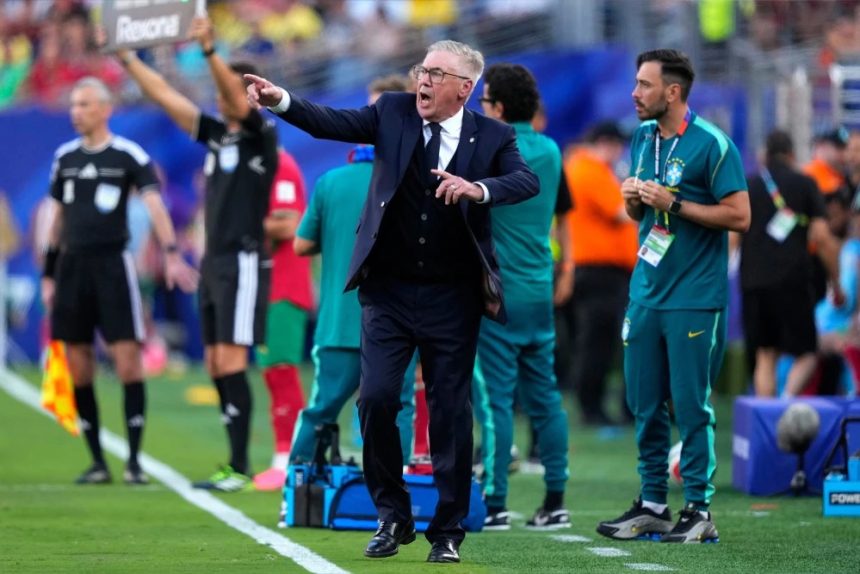
Brazil and head coach Carlo Ancelotti have come under immediate scrutiny following their opening 1-1 draw against Morocco at the 2026 FIFA World Cup, with critics questioning both the team’s performance and tactical approach.
The match, played at MetLife Stadium in New Jersey, saw Brazil fight back after conceding first, but the result did little to ease concerns among supporters and the media. Fans who travelled in large numbers to support the Seleção expressed frustration after the final whistle, describing the display as underwhelming and lacking cohesion.
Morocco struck first through Ismael Saibari, who finished a swift attacking move after a defensive turnover. Brazil responded through Vinícius Júnior, who produced a moment of individual brilliance to level the score and keep his side in the contest.

Despite flashes of quality from Vinícius, Brazil struggled to assert control for long periods, with their attacking rhythm often breaking down in the final third. A missed opportunity in the second half, when Raphinha failed to convert a promising chance, further highlighted the team’s inefficiency in front of goal.
After the match, Ancelotti faced intense questioning from Brazilian and international media over his lineup choices, substitutions, and overall tactical structure. The Italian coach defended his approach, noting that opening matches often carry added tension and that his players were affected by nerves and pressure.
“You don’t win a World Cup based on your first match,” Ancelotti said, acknowledging the difficult start while insisting there was room for improvement.
The experienced manager, who took charge of Brazil in 2025 after a decorated club career in Europe, admitted that his side lost control in the opening stages but improved after halftime. However, he conceded that the team still needed greater balance and attacking consistency.
Questions were also raised about the limited involvement of young striker Endrick, with Ancelotti declining to comment on individual selection decisions but signalling that changes to the starting lineup could be considered going forward.

Despite the criticism, the coach maintained confidence in his squad, stressing that setbacks are part of tournament football and that Brazil would continue to adjust as the competition progresses.
While Vinícius Júnior’s performance offered a bright spot, the overall display left Brazil facing early pressure in a tournament where expectations remain extremely high for the five-time world champions.