RismadarVoice Reporters
November 16, 2026
The race to succeed United Nations Secretary-General António Guterres has intensified as disagreements among major world powers complicate efforts to select the organisation’s next leader.
Eight candidates remain in contention ahead of the expiration of Guterres’ tenure on December 31, 2026, with the United States, Russia and China holding significant influence over the selection process.
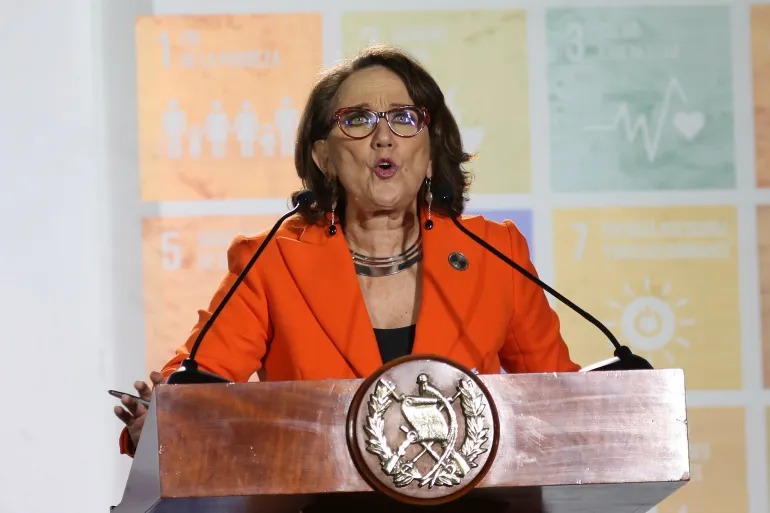
Costa Rican diplomat Rebeca Grynspan, currently head of the United Nations Conference on Trade and Development, has emerged with the strongest support in recent informal Security Council ballots.
According to results obtained by UN-focused publication PassBlue, Grynspan secured 12 favourable votes and three negative votes during the November 5 straw poll.
However, the confidential voting process did not identify the countries opposing her candidacy, leaving uncertainty over whether she could face a veto from a permanent Security Council member.

Argentina’s Rafael Grossi, Director-General of the International Atomic Energy Agency, received nine favourable votes, while Guyana’s Carolyn Rodrigues Birkett secured eight.
Other candidates include María Fernanda Espinosa, Ivonne A-Baki, Uganda’s Olara Otunnu, the United Arab Emirates’ Lana Nusseibeh and Türkiye’s Feridun Sinirlioğlu.
Nusseibeh’s candidacy has attracted scrutiny amid allegations concerning the UAE’s involvement in Sudan’s conflict. The UAE has denied supplying weapons to Sudanese paramilitary forces.
The contest comes amid broader disagreements over the UN’s response to international conflicts, institutional reforms and financial challenges.
Under the UN Charter, the Secretary-General is appointed by the General Assembly following a recommendation from the 15-member Security Council.

A successful candidate must secure at least nine Security Council votes without being vetoed by any permanent member: the United States, Russia, China, Britain or France.
The recommendation must subsequently be approved by the 193-member General Assembly.
Although Grynspan currently enjoys substantial support in informal polling, the results do not guarantee her appointment.
The UN does not officially publish individual straw-poll results, and negative votes in these preliminary ballots do not necessarily indicate a formal veto.
Observers have warned that prolonged disagreements could delay the appointment and reduce the time available for the incoming Secretary-General to prepare for office.
The next UN chief is expected to assume responsibility on January 1, 2027, at a time when the organisation faces considerable diplomatic, financial and institutional pressures.
With no candidate yet formally recommended, negotiations among Security Council members remain central to determining who will succeed Guterres.