

RismadarVoice Reporters
August 3, 2026
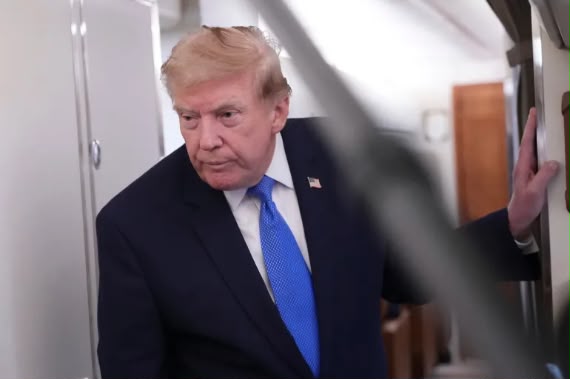
US President Donald Trump has renewed his call for oil companies to reduce petrol prices for American consumers, while criticising Chevron Chairman and Chief Executive Officer, Mike Wirth, for failing to acknowledge his administration’s role in the company’s recent performance.
Trump made the remarks on Monday as oil prices fell sharply amid renewed expectations of negotiations between the United States and Iran over the war and the reopening of the strategic Strait of Hormuz.
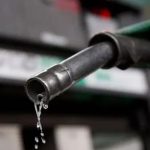
The US President said Chevron and other oil companies should immediately reduce retail fuel prices, arguing that his administration had created conditions that benefited the industry.
Trump also criticised Wirth for what he described as a failure to recognise the administration’s contribution to Chevron’s expansion, particularly following the company’s return to Venezuela.
He said the same demand applied to other oil companies, insisting that consumer fuel prices should be brought down immediately.

The president’s latest comments come amid growing pressure over rising petrol prices in the United States following the outbreak of war between the US, Israel and Iran in February.
Oil prices surged by more than 20 per cent in July as renewed hostilities disrupted supplies and affected shipping through the Strait of Hormuz and the Red Sea.
However, crude prices fell by about five per cent on Monday following Trump’s announcement that negotiations with Iran were expected to resume.
Brent crude, the international benchmark, traded at about $82.91 per barrel at 11:59am GMT, representing a five per cent decline from the previous day and nearly an 18 per cent drop from its recent peak of $101 per barrel.
Trump has repeatedly promised that US fuel prices would fall sharply once the conflict with Iran ends. However, economists have questioned the extent to which the end of hostilities would immediately translate into lower prices at the pump, citing the broader economic effects of the conflict.
Trump had earlier said he cancelled plans for a major military strike against Iran after Qatar, Saudi Arabia and the United Arab Emirates conveyed what he described as the “perimeters of a deal.”
He said the proposed framework included the immediate reopening of the Strait of Hormuz and an end to Iran’s nuclear threat.
Iran, however, has denied that direct negotiations with the US are currently taking place.

Iranian Foreign Ministry spokesman Esmaeil Baghaei said Monday that Tehran was only discussing the management of the Strait of Hormuz with Oman and had no plans for talks with Washington.
The conflicting statements have added uncertainty to diplomatic efforts aimed at ending the conflict and restoring stability to a key global energy route.
The Strait of Hormuz is a major transit route for global oil supplies, and prolonged disruption could continue to affect energy prices and fuel costs in the US and other economies.