




RismadarVoice Reporters
June 4, 2026
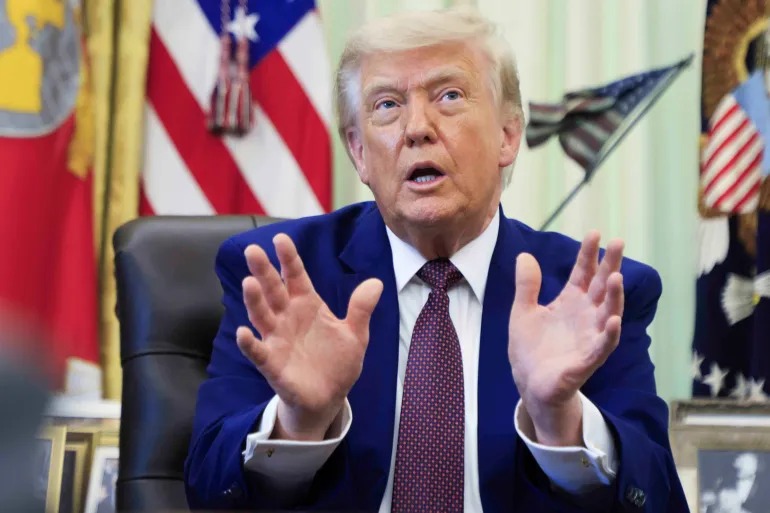
United States President, Donald Trump has sharply criticised members of Congress, including several Republicans, after the House of Representatives approved a resolution aimed at restricting his authority to pursue military action against Iran without congressional approval.
The resolution, passed on Wednesday by a narrow 215-208 margin, seeks to reaffirm Congress’s constitutional role in decisions related to war. Four Republican lawmakers joined Democrats in supporting the measure, allowing it to secure a majority after three previous failed attempts.
Reacting to the development, Trump described the vote as poorly timed, arguing that it could undermine ongoing efforts by his administration to secure a diplomatic breakthrough with Iran.
In a post on his Truth Social platform, the president questioned the decision to pass the resolution while negotiations aimed at ending hostilities with Tehran remain underway. He characterised the move as unpatriotic and suggested it could weaken the United States’ position during sensitive talks.
The latest vote comes amid continuing tensions between Washington and Tehran. While both sides have engaged in intermittent diplomatic discussions, recent weeks have also witnessed limited military exchanges, highlighting the fragile nature of current efforts to reach a lasting ceasefire.

Among the major issues complicating negotiations are disagreements over Iran’s nuclear programme and the future of the Strait of Hormuz, a strategically important shipping route through which a significant portion of global oil supplies passes.
Trump also directed criticism at the four Republican lawmakers who backed the resolution. Those lawmakers include Representatives Thomas Massie of Kentucky, Tom Barrett of Michigan, Warren Davidson of Ohio and Brian Fitzpatrick of Pennsylvania.
The president accused the lawmakers of seeking political attention and dismissed the House action as largely symbolic.
Political observers have interpreted the vote as a sign of growing divisions within the Republican Party, particularly as lawmakers prepare for the upcoming midterm elections.
Despite its passage in the House, the measure faces significant hurdles before becoming law. It must first gain approval in the Republican-controlled Senate, where supporters would need to overcome strong opposition from party leadership.
Even if the resolution clears the Senate, Trump is expected to veto it. Overriding a presidential veto would require a two-thirds majority in both chambers of Congress, a threshold that analysts believe would be difficult to achieve.
Nevertheless, supporters of the resolution argue that the vote represents an important assertion of congressional authority. Advocacy groups and constitutional scholars have renewed calls for the Senate to consider the measure, stressing that the power to declare war rests with Congress under the U.S. Constitution.
David Janovsky, acting director of The Constitution Project, said the House vote was a significant step toward reasserting constitutional checks and balances. He argued that lawmakers should continue efforts to ensure military engagements receive proper congressional authorisation.
Critics of the conflict have also pointed to its economic consequences, including rising energy prices and broader concerns about inflation. Public opinion surveys have indicated growing opposition to the military campaign, with scepticism increasing among both independent voters and some Republican supporters.

Jamal Abdi, president of the National Iranian American Council, said lawmakers are facing mounting pressure from constituents concerned about the human and economic costs of the conflict. He noted that many Americans believe resources should be focused on domestic priorities rather than prolonged military involvement overseas.
As debate continues in Washington, attention now shifts to the Senate, where lawmakers will decide whether to advance the measure and further challenge the administration’s approach to the conflict with Iran.