RismadarVoice Reporters
September 24, 2026
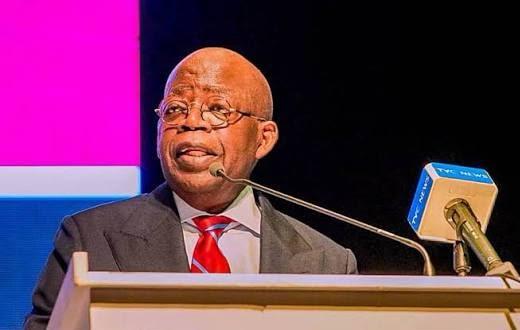
President Bola Tinubu has renewed Nigeria’s demand for sweeping reforms of the United Nations, declaring that the world of 2026 cannot remain governed by a distribution of power established in 1945.
Tinubu made the call in Nigeria’s national statement to the 81st United Nations General Assembly in New York on Thursday, delivered on his behalf by Vice President Kashim Shettima.
The President said reform should begin with the UN Security Council, demanding at least two permanent seats for Africa with full rights and responsibilities, including veto power for as long as the veto remains part of the Council’s structure.
He also called for Africa to receive five non-permanent seats on the Security Council.
“The reform of this institution must begin with the reconstitution of the Security Council, for the world of 2026 cannot remain captive to the distribution of power in 1945,” Tinubu said.

He argued that Africa could no longer remain on the margins of a body responsible for making critical decisions on international peace and security, despite the continent featuring prominently on the Council’s agenda.
Tinubu said Nigeria’s position was consistent with the Ezulwini Consensus and Sirte Declaration, which articulate Africa’s common position on reform of the Security Council.
Beyond UN reform, the President called for stronger international cooperation to resolve conflicts and address threats to global peace.
He warned against rising nationalism and urged countries to return to dialogue, mutual respect, collective responsibility and international law.
“The persistence of conflict across the world recalls the purpose for which the United Nations was founded: to spare succeeding generations the devastation of war,” he said.
Tinubu reaffirmed Nigeria’s commitment to multilateralism and the peaceful settlement of international disputes, citing the country’s longstanding participation in peacekeeping and regional security efforts.
He said Nigeria would continue working through regional and international institutions to advance mediation, democratic governance, counter-terrorism and maritime security.
The President also called for reforms to the international financial system, arguing that inadequate access to development financing continued to constrain poorer countries.
He said developing economies should have improved access to concessional financing and sustainable debt arrangements to enable them to invest more resources in education, healthcare, infrastructure and economic development.
On climate change, Tinubu maintained that developing countries should not be forced to choose between economic development and environmental protection.
He said African countries needed opportunities to industrialise, reduce poverty and expand energy access through low-carbon development supported by climate financing and technology transfer.
The President reaffirmed Nigeria’s commitment to the Paris Agreement and its Energy Transition Plan, including the country’s target of achieving net-zero emissions by 2060.
Tinubu also identified artificial intelligence and digital innovation as increasingly important to economic development, saying Nigeria would continue expanding digital infrastructure, broadband connectivity and technology entrepreneurship.

On security, he said Nigeria’s experience confronting terrorism demonstrated the increasingly transnational nature of security threats and the need for stronger international cooperation.
He maintained that military responses alone could not guarantee lasting peace, stressing the importance of education, economic opportunities, accountable governance and respect for human rights.
Tinubu also called for intensified diplomatic efforts to resolve conflicts, including the war in Sudan, warning of the wider humanitarian and geopolitical consequences of prolonged instability.
He said a reformed and more representative United Nations remained necessary for an international system capable of responding effectively to contemporary challenges.
“Whatever our differences, we must remember that humanity is our oldest citizenship, and peace is the inheritance we owe every child,” Tinubu said.