

RismadarVoice Reporters
May 29, 2026
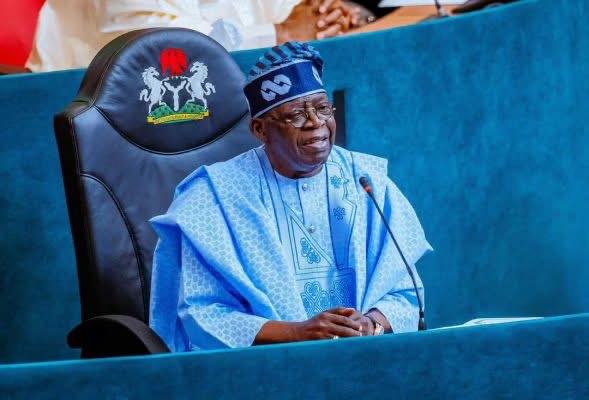
President Bola Ahmed Tinubu on Friday said Nigeria has stabilised economically after three years of “difficult but necessary” reforms, insisting that the sacrifices made by Nigerians since the removal of fuel subsidy and foreign exchange reforms were beginning to yield results.
In a nationwide broadcast marking the third anniversary of his administration, Tinubu defended key economic policies introduced since May 2023, stating that the country had avoided fiscal collapse and was now experiencing recovery across critical sectors.
The President stated that Nigeria was spending approximately ₦18.4 billion daily on petrol subsidy before his administration scrapped it, amounting to over ₦4 trillion in 2022 alone.
He also blamed multiple exchange rate windows for what he described as over ₦8 trillion in losses to arbitrage and speculative activities within three years.

“The situation demanded urgent and courageous action. Difficult but necessary decisions had to be taken to stabilise the economy and prevent a deeper national crisis,” Tinubu said.
According to him, the reforms triggered hardship and increased living costs, but he assured Nigerians that “your sacrifice has not been in vain.”
Tinubu claimed that the economy is now “more competitive and better positioned for sustainable growth,” citing increased investor confidence and gains in the capital market.
He said the Nigerian Exchange All Share Index rose from 53,000 points in 2023 to 250,000 points in 2026, while market capitalisation increased from ₦30 trillion to ₦160 trillion.
The President also highlighted ongoing infrastructure projects across the country, including the Lagos-Calabar Coastal Highway, Sokoto-Badagry Super Highway, Abuja-Kaduna-Zaria-Kano Road, and the East-West Road.
According to him, over 2,700 kilometres of highways and major roads are currently under construction, reconstruction, or rehabilitation nationwide.
Tinubu said rail modernisation projects were ongoing to improve connectivity and economic integration, while reforms in the oil and gas sector had attracted fresh investments from international oil companies.
He disclosed that the $5 billion NLNG Train 7 project was nearing completion and noted that improved local refining capacity was helping Nigeria reduce dependence on imported petroleum products.
On power supply, the President said his administration was addressing long-standing sectoral challenges by clearing legacy debts, expanding transmission infrastructure, investing in renewable energy, and strengthening the national grid.
“No modern economy can grow in darkness,” he stated.
Tinubu also announced that the Nigerian Education Loan Fund (NELFUND) had provided loans to more than 1.5 million students, with over ₦282 billion disbursed.
He said the Renewed Hope Housing Programme and Federal Housing Authority initiatives were delivering more than 10,000 housing units across 14 states and the FCT, creating over 300,000 jobs.
The President further said agricultural interventions had supported millions of farmers through improved access to seedlings, fertilisers, mechanisation, irrigation, and finance.
On security, Tinubu said security agencies had intensified operations against terrorists, bandits, kidnappers, oil thieves, and other criminal networks.

While admitting that challenges remain, he maintained that many communities and highways were becoming safer.
“We will not relent until every Nigerian can live, work, travel, and dream in safety,” he said.
Tinubu urged Nigerians to remain hopeful and united, stressing that national recovery requires collective sacrifice and discipline.
“We must choose hope over despair, unity over division, and nation-building over narrow interests,” the President said.