RismadarVoice Reporters
October 27, 2026
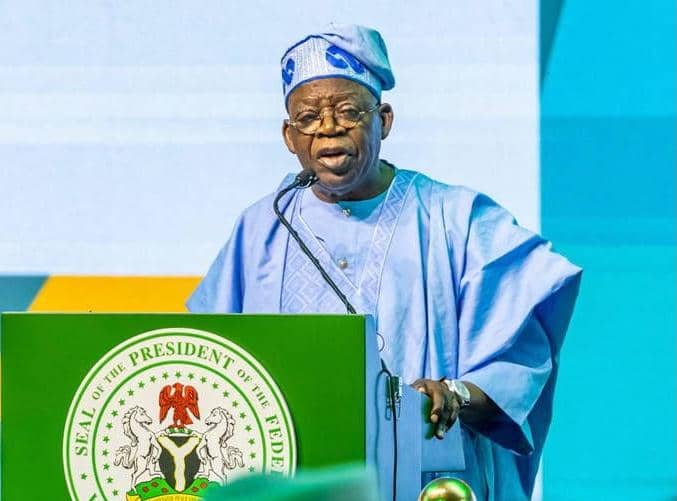
President Bola Tinubu has defended his administration’s economic reforms, saying they are gradually reversing Nigeria’s longstanding economic underperformance and creating opportunities for investment, employment and sustainable growth.
Tinubu made the remarks on Monday while declaring open the 32nd Nigerian Economic Summit in Abuja, where he was represented by Vice President Kashim Shettima.
The summit, themed Growth That Works: Delivering Jobs, Productivity and Shared Prosperity, brought together government officials, business leaders and development partners to discuss Nigeria’s economic direction.
The President said his administration had undertaken difficult reforms to address structural weaknesses, restore investor confidence and create a more productive economy.
He maintained that economic recovery must ultimately translate into improved livelihoods for workers, farmers, manufacturers, entrepreneurs and young Nigerians seeking employment.
Tinubu acknowledged that economic stability alone was insufficient, stressing the need for better-quality jobs, improved infrastructure, stronger businesses and increased productivity.

Citing National Bureau of Statistics figures, he said Nigeria’s economy grew by 3.89 per cent in the first quarter of 2026, compared with 3.13 per cent during the corresponding period in 2025.
He also highlighted capital importation of $10.37 billion during the quarter, representing an 83.83 per cent increase year-on-year.
However, official data show that portfolio investments accounted for approximately 95 per cent of those inflows, while foreign direct investment represented only 1.3 per cent.
The President said the government would continue simplifying regulations, improving policy transparency and expanding access to finance to encourage productive investment.
He also outlined plans to strengthen electricity supply, agricultural productivity, domestic mineral processing and industrial competitiveness.
Tinubu maintained that infrastructure spending, education and investment incentives should be assessed according to their contributions to employment, productivity and economic development.
Meanwhile, Finance Minister Taiwo Oyedele presented a proposed Nigerian Economic Policy Framework intended to improve policy consistency and guide future government decisions.
Oyedele explained that the framework would promote evidence-based policymaking, including assessments of the likely benefits and costs of major economic decisions.
The Nigerian Economic Summit Group Chairman, Olaniyi Yusuf, acknowledged improvements in some economic indicators but urged greater attention to high production costs, infrastructure gaps and household welfare.

He stressed that economic stability must translate into measurable improvements in business conditions and living standards.
The summit also featured discussions on investment, economic competitiveness and the importance of maintaining predictable policies.
Although the administration has cited stronger growth and increased capital inflows as signs of progress, the challenge remains translating those indicators into sustainable employment, higher productivity and improved purchasing power for Nigerians.