RismadarVoice Reporters
September 13, 2026
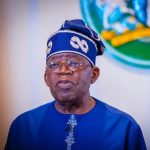
President Bola Ahmed Tinubu has called for comprehensive reforms of the United Nations Security Council and the international financial system, saying global institutions must better reflect contemporary economic and demographic realities.
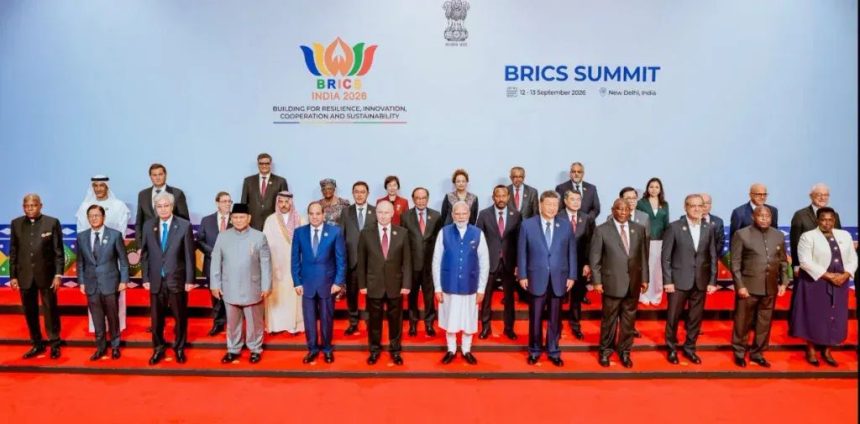
Tinubu made the call on Sunday at the 18th BRICS Summit in New Delhi, India, where he was represented by Vice President Kashim Shettima.
The summit, chaired by Indian Prime Minister Narendra Modi, is being held under the theme “Building for Resilience, Innovation, Cooperation and Sustainability.”
In his address, Tinubu said Nigeria supports a more representative, equitable and responsive system of global governance and views BRICS as an important platform for strengthening the voice of developing countries.

According to a statement published through the official social media account of the Nigerian Government, the President said reforms should extend to international institutions responsible for global security, economic policy and financial governance.
“BRICS amplifies the voice of the Global South and advances a more inclusive international order, consistent with Nigeria’s call for institutions that reflect contemporary economic and demographic realities,” Tinubu said.
He urged BRICS members to move beyond declarations and establish practical mechanisms capable of producing measurable development outcomes.
“Nigeria calls for a BRICS partnership that moves from dialogue to delivery, from commitments to implementation, and from cooperation to measurable development outcomes,” he said.
Tinubu said Nigeria’s participation in BRICS is aimed at promoting mutually beneficial economic cooperation, strengthening South-South partnerships and advancing Africa’s development priorities.
He linked the country’s position at the summit to his administration’s Renewed Hope Agenda, which he said was designed to strengthen Nigeria’s economic resilience and improve its capacity to withstand external shocks.
“For Nigeria, resilience means building an economy capable of withstanding global shocks while creating sustainable opportunities for our people,” the President said.
He identified macroeconomic stability, diversification of production, increased productivity, infrastructure development, human-capital investment, private-sector-led growth and climate resilience as key elements of the government’s economic reform programme.
Tinubu also invited BRICS member states and investors to expand cooperation with Nigeria in strategic sectors, including energy, agriculture, food security, infrastructure, manufacturing, healthcare, trade and critical minerals.

He said Nigeria was particularly interested in partnerships that would promote technology transfer, local value addition, industrial development and employment generation.
The President also highlighted Nigeria’s role in promoting digital trade under the African Continental Free Trade Area, urging BRICS investors to view the country as a gateway to Africa’s expanding consumer and investment market.
“We also invite BRICS investors to view Nigeria as a gateway to Africa’s expanding market under the African Continental Free Trade Area, whose protocol on digital trade Nigeria is championing,” he said.
Tinubu stressed the importance of rules-based international trade, e-commerce and digital commerce, arguing that technological development has reduced the relevance of traditional national borders to modern business.
He further drew attention to Nigeria’s large and youthful population, describing its young population as a major economic and innovation asset.
The President said Nigeria was investing in digital skills, entrepreneurship, research, artificial intelligence and technology-driven businesses through initiatives including 3 Million Technical Talent (3MTT), Project BRIDGE and national artificial intelligence programmes.
He welcomed greater BRICS cooperation in artificial intelligence, digital public infrastructure, financial technology, telecommunications, cybersecurity, biotechnology and advanced manufacturing.
“A nation that owns no technology risks renting its future,” Tinubu said, underscoring his administration’s emphasis on technological capacity and domestic innovation.
He called for stronger cooperation that would help Nigeria create jobs, increase trade, improve transportation and technology infrastructure and strengthen its productive capacity.
The President also said Africa should move from being predominantly a recipient of global development assistance to becoming a major centre of economic growth, investment and technological innovation.
“Our partnership must create jobs, expand trade, transport technology and strengthen our nation’s productive capacity,” he said.
“We must build a future in which Africa moves from the margins of global development to the frontiers of global growth and innovation. Nigeria is ready to play its part.”

Nigeria’s intervention comes as BRICS seeks to strengthen its role as a platform for cooperation among emerging economies and expand the influence of the Global South in international economic and political affairs.
Tinubu’s call for reforms of the UN Security Council and global financial architecture also aligns with Nigeria’s longstanding demand for greater African representation in major international decision-making institutions.
The President’s participation through Vice President Shettima signals Nigeria’s intention to use its engagement with BRICS to pursue economic partnerships while advocating reforms that would give developing countries greater influence in global governance.