RismadarVoice Reporters, May 5, 2026
Heightened tensions in the Gulf have taken a new turn as Donald Trump announced that the United States military struck seven Iranian “fast boats” in the strategic Strait of Hormuz, even as Washington moves to evacuate stranded commercial vessels from the region.
The operation forms part of what Trump has described as “Project Freedom,” an initiative aimed at guiding ships through the largely blocked waterway. The strait has remained severely disrupted since military exchanges involving the US and Iran earlier this year.
Shipping giant Maersk confirmed that one of its US-flagged vessels successfully exited the Gulf under American military protection, reporting that the transit was completed safely without incident.
However, accounts of recent military actions remain sharply contested. Iranian state media rejected US claims about the destruction of fast boats, instead alleging that two civilian cargo vessels were hit, resulting in casualties. The US military has not confirmed those claims.
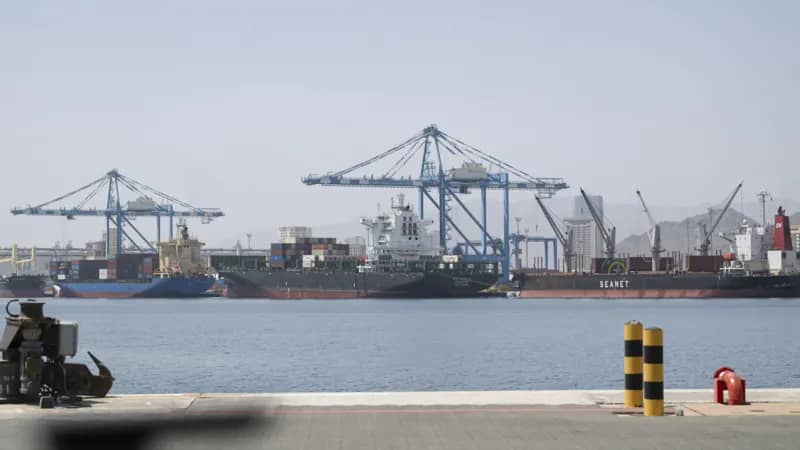
Meanwhile, regional tensions intensified following reports of attacks on commercial and energy infrastructure. Authorities in the United Arab Emirates said a tanker linked to state oil firm Adnoc was struck in the strait, while a fire broke out at the Fujairah oil terminal after what officials described as an attack. South Korea also reported an explosion involving one of its vessels near UAE waters.
The UAE said its air defence systems intercepted multiple missiles and drones during the incident, though damage and injuries were still recorded. India confirmed that three of its nationals were among those injured in the Fujairah strike, condemning the attack as unacceptable.
Iran’s Foreign Minister, Abbas Araghchi, warned that escalating military actions would not resolve the crisis. He criticised the US-led maritime operation, describing “Project Freedom” as a path to further deadlock rather than de-escalation.
Global reactions have been swift, with leaders calling for restraint and renewed diplomacy. Emmanuel Macron described the attacks as unjustified, while Keir Starmer reaffirmed support for Gulf allies. Germany’s Friedrich Merz urged Tehran to return to negotiations and lift restrictions on the vital shipping route.
The Strait of Hormuz, through which roughly a fifth of the world’s oil and gas supplies typically pass, has been largely inaccessible since the conflict escalated. Although a ceasefire was announced in April, maritime traffic remains severely limited, with thousands of seafarers and vessels stranded.
The disruption has already impacted global energy markets, with Brent crude prices surging above $115 per barrel amid fears of prolonged supply constraints.
As diplomatic efforts stall and military rhetoric intensifies, uncertainty continues to cloud one of the world’s most critical energy corridors, raising concerns over both regional stability and global economic fallout.