RismadarVoice Reporters
October 29, 2026
Spain has declared three days of national mourning following a collision between two high-speed trains that killed at least 68 people and injured dozens near Toledo on Wednesday.
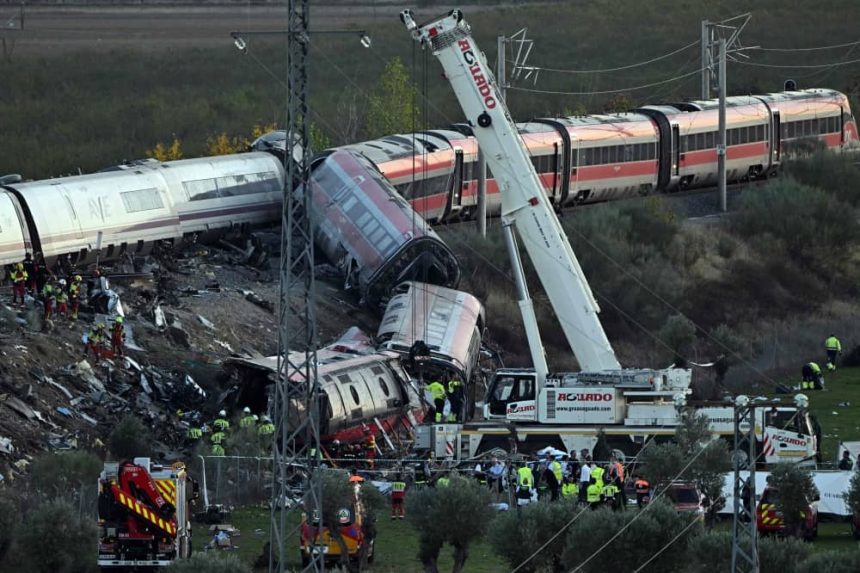
The accident occurred shortly before 9 a.m. when a Renfe train travelling from Madrid to Seville collided with a stationary train operated by Iryo near Urda, approximately 130 kilometres south of Madrid.
Emergency workers searched damaged carriages for survivors as relatives gathered at railway stations and temporary assistance centres seeking information about missing passengers.

According to authorities, more than 500 passengers were travelling on the two trains when the collision occurred.
Several carriages derailed, leaving rescuers working through severely damaged wreckage.
Survivors described scenes of panic and devastation, with passengers thrown from their seats by the force of the collision.
One passenger, Joaquim Torres, told Al Jazeera that he attempted to comfort an injured woman who subsequently died in his arms.
Another survivor, Sebastian Herrero, described the destruction as overwhelming, saying several carriages had been reduced to twisted metal.
Spanish Prime Minister Pedro Sanchez expressed condolences to victims’ families and announced three days of national mourning.
Transport Minister Oscar Puente said preliminary findings indicated that a failure in the railway’s communications system had triggered a red signal, bringing train movements to a halt.
However, the Renfe train was subsequently authorised to continue despite another train remaining stationary ahead.
Puente described the authorisation as inexplicable, while stressing that investigations would establish the circumstances surrounding the decision.
The tragedy has intensified concerns about railway safety following another deadly collision near Adamuz, Cordoba, in January, which killed 46 people.

Opposition politicians have demanded an independent review of Spain’s railway infrastructure, maintenance practices and safety systems.
The latest accident has also renewed debate over investment priorities within the country’s extensive high-speed rail network.
According to figures cited by Al Jazeera, approximately 16 per cent of Spain’s high-speed railway expenditure between 2018 and 2022 went towards maintenance and repairs, with most spending directed towards infrastructure development.
Rail safety experts have warned that increasing passenger demand must be matched by adequate maintenance and modernised safety systems.
Meanwhile, Renfe has activated emergency assistance arrangements for victims and their families, while railway services along affected sections of the Madrid-Andalusia corridor remain disrupted.
Authorities have promised a comprehensive investigation to establish responsibility and prevent similar tragedies.
The confirmed death toll may change as emergency teams complete recovery operations and identify victims.