RismadarVoice Reporters, June 29, 2026
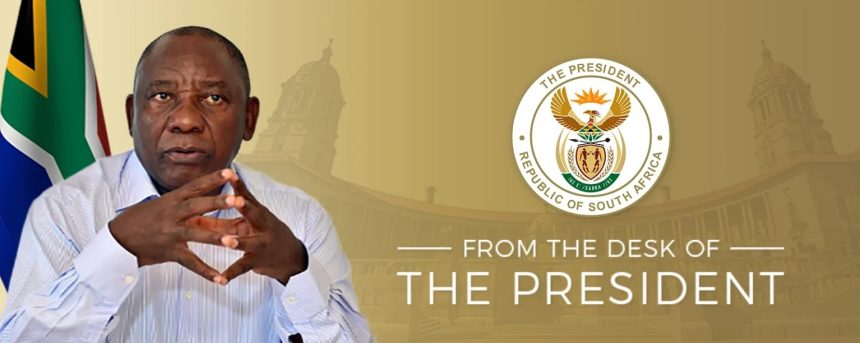
President Cyril Ramaphosa has called on South Africans planning to join Tuesday’s anti-immigration demonstrations to exercise restraint, cautioning that any resort to violence or vigilante action would undermine the country’s constitutional values.
In a national address delivered Monday under the theme “Protest is both a right and a responsibility,” the president acknowledged that public frustration over undocumented migration is widespread and legitimate, even as he drew firm boundaries around how that frustration should be expressed.
He noted that June 30 has been set aside by various groups for demonstrations targeting illegal immigration, and said the grievances behind the planned protests ranging from strained public services to criminal networks exploiting weaknesses in the immigration system are concerns that “deserve to be heard.”

Ramaphosa affirmed that South Africa’s Constitution guarantees citizens the right to demonstrate and that this freedom remains a hallmark of the country’s democracy. However, he was unambiguous that this right does not extend to intimidation, property destruction or physical violence.
“The right to protest and freedom of expression does not allow people to threaten or intimidate others, or to engage in acts of vandalism or violence,” he said, adding that anyone who breaks the law during the protests would face consequences.
The president used the address to outline steps already underway to overhaul the immigration system, including tighter border controls, reforms to visa and asylum processing, and a crackdown on corruption that he said has allowed illegal entry to persist.
He stressed that accountability would extend to officials found to have enabled illegal immigration through negligence or corruption, just as enforcement gaps within the system would be addressed. Ramaphosa also pointed to consultations his government had held with traditional leaders, unions, business chambers and faith groups, many of whom he said had urged calm and adherence to the rule of law.
Ramaphosa was careful to distinguish between undocumented migrants and the many foreign nationals living in South Africa legally, noting that the latter group works, studies, raises families and contributes to the economy. He said such individuals remain entitled to full protection under South African law.
The president’s sharpest remarks were directed at those who attempt to enforce immigration rules themselves rather than leaving the task to law enforcement. Invoking the painful legacy of apartheid-era pass laws, he argued that the power to demand identification documents and act against undocumented persons rests solely with government agencies operating under constitutional authority not with private citizens.

“Whatever the motivation, taking the law into one’s own hands is vigilantism and has no place in our constitutional democracy,” he said, describing such conduct as “vigilantism thinly disguised in the language of patriotism.”
He urged citizens not to revisit the era when people were stopped in public and forced to prove their identity under threat of harassment, calling it a chapter of history South Africa must not repeat.
Ramaphosa closed his address by appealing for a path defined by dialogue rather than confrontation, and justice rather than retaliation. He said law enforcement agencies stood ready to keep the peace while safeguarding citizens’ right to protest, and insisted that protecting the nation’s borders and upholding its Constitution were not mutually exclusive goals.
“We are capable of doing both, and we must,” he said.