


RismadarVoice Reporters
September 15, 2026
The Minister of Power, Joseph Olasunkanmi Tegbe, has called for stronger collaboration with the Economic and Financial Crimes Commission to tackle vandalism, energy theft and other economic crimes contributing to financial losses in Nigeria’s power sector.
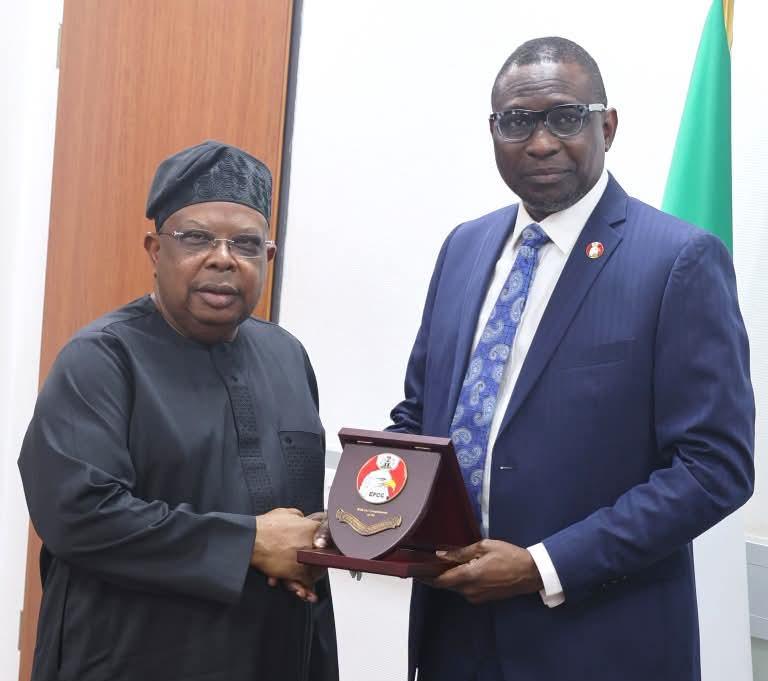
Tegbe made the call on Tuesday in Abuja when he led a delegation from the Ministry of Power on a courtesy visit to the EFCC Executive Chairman, Ola Olukoyede, at the Commission’s headquarters.
The minister said persistent vandalism of power infrastructure and widespread electricity theft were imposing significant financial losses on the sector and undermining efforts to improve electricity supply across the country.
According to him, the Ministry of Power does not have the statutory authority to directly prosecute offenders involved in some of the economic crimes affecting the sector, making cooperation with law enforcement agencies essential.

Tegbe specifically requested the EFCC’s intervention in investigating and prosecuting individuals and companies allegedly involved in the theft, purchase and destruction of power infrastructure, as well as those involved in electricity revenue fraud.
“There are two areas where we need your intervention. One area is vandalism. There is a lot of vandalism going on in this country,” Tegbe said.
He cited the theft of manhole covers and other infrastructure components, warning that the vandalisation of power facilities was also affecting transmission towers and other critical assets.
The minister said the Federal Government had directed relevant authorities to increase public awareness and prosecute both those stealing power infrastructure and those purchasing stolen materials.
He explained that the ministry could identify and report offenders but required the intervention of agencies with the appropriate investigative and prosecutorial powers.
“We believe the Commission can help us in that area. We need to collaborate,” he said.
Tegbe also identified energy theft as another major area requiring EFCC intervention.

He alleged that some companies and other electricity consumers with access to power deliberately fail to pay their electricity bills, contributing to substantial revenue losses for the sector.
“The second area is energy theft. Companies that have access to power do not pay electricity bills. We are losing billions annually. We need your intervention,” the minister said.
The minister said curbing the two problems would not only reduce financial losses but also help strengthen the financial sustainability of the electricity sector and support efforts to improve power supply.
Tegbe commended Olukoyede for what he described as achievements in the investigation and prosecution of economic and financial crimes, as well as the recovery of proceeds of crime.
He described the EFCC chairman’s approach as “bold and ambitious,” expressing optimism that closer cooperation between both institutions would produce stronger enforcement against economic crimes affecting the power sector.
The minister also acknowledged the EFCC’s intervention in a legal dispute that had stalled the 215-megawatt Kudendan Power Plant project in Kaduna State.

He said resolving obstacles affecting important power projects was essential to increasing electricity generation and expanding the country’s power infrastructure.
Responding, Olukoyede described vandalism and energy theft as forms of revenue fraud and major acts of economic sabotage against the country.
The EFCC chairman pledged the Commission’s support for the Ministry of Power and said the agency would work with the ministry to strengthen preventive mechanisms across power-sector projects.
Olukoyede specifically proposed the introduction of Fraud Risk Assessment and Control measures for ministry projects, including both abandoned projects and new developments.
“We are ready to work with you particularly in the area of incorporating Fraud Risk Assessment and Control into all your projects; both the abandoned ones and the new ones coming up,” he said.
He disclosed that the EFCC would establish a team to analyse and audit selected projects as part of efforts to identify financial risks, strengthen accountability and prevent the diversion of public funds.
The EFCC chairman further assured the ministry that the Commission would support monitoring of ongoing projects, stressing that anti-corruption intervention should begin before public funds are lost rather than after suspected fraud has already occurred.

“We must not wait till monies are stolen, particularly on sensitive projects. It is not going to be business as usual,” Olukoyede said.
The proposed collaboration comes amid broader government efforts to address infrastructure losses, improve revenue collection and strengthen accountability in Nigeria’s electricity industry.
The two institutions are expected to work more closely on investigations, project monitoring, fraud-risk assessment and prosecution of offenders as part of efforts to protect critical power infrastructure and improve the financial viability of the sector.