


RismadarVoice Reporters
September 25, 2026
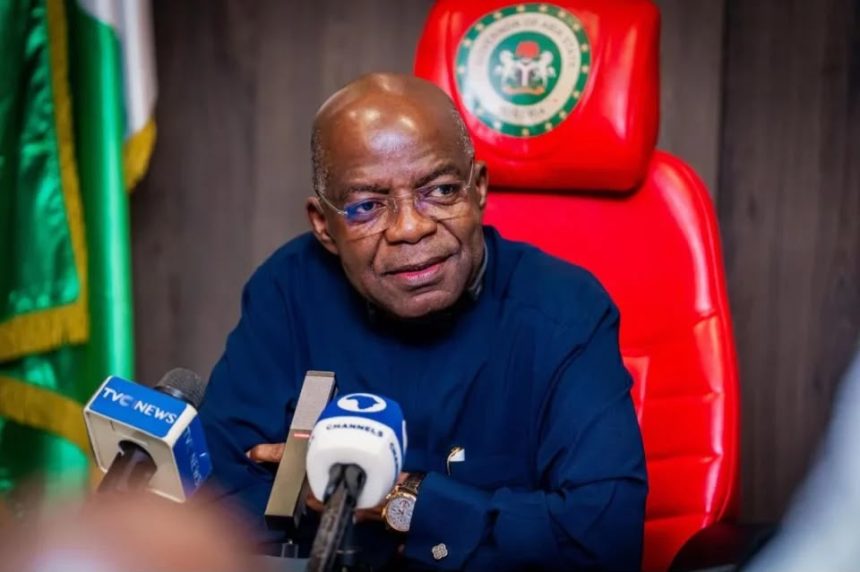
Abia State Governor Alex Otti has reaffirmed his account that about $155 million belonging to Anambra State was converted into dollars and invested during Peter Obi’s tenure as governor, saying he personally participated in the transaction while heading Diamond Bank.
Otti spoke during an interview on Friday while responding to renewed questions over a June 8, 2020 article in which he discussed Obi’s management of Anambra’s finances.
The governor said he stood by the account, explaining that the article was written to demonstrate that prudent management of public resources was possible.

“They are referring to what I wrote in 2020. I think that was June 8, 2020. I was using it to prove that it’s still possible for people to be prudent in government,” Otti said.
According to Otti, Obi initially intended to retain the funds in naira but approached him while he was chief executive of Diamond Bank.
Otti said he advised against keeping the funds entirely in naira because of the risk of depreciation and recommended converting them into dollars.
“It’s an account of what happened,” he said, explaining that the funds were subsequently converted into foreign currency.
Otti had previously said that approximately $155 million was invested in Tier-2 capital instruments of three Nigerian banks and other foreign-currency investments.
The governor maintained that his account was based on his direct involvement in the transaction rather than information subsequently provided to him.

“So it’s a statement of fact,” Otti said, adding that his position on the transaction had not changed.
His comments come amid renewed debate over the financial position of Anambra State when Obi left office in March 2014.
Obi has maintained that he left the state with more than $150 million in funds and has rejected claims that his administration left $123 million in debt, describing the presentation of the figures as incorrect public accounting.