RismadarVoice Reporters, 30 August 2026
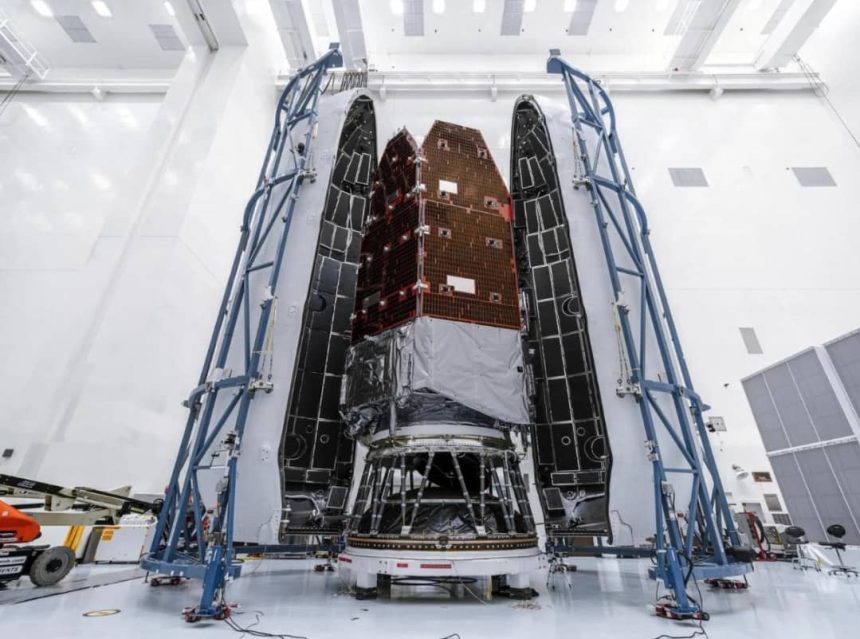
NASA has launched the Nancy Grace Roman Space Telescope, a powerful new observatory designed to investigate some of the biggest mysteries in the universe, including dark matter, dark energy and distant planetary systems.
The telescope, described by scientists as a “discovery machine,” was launched aboard a SpaceX Falcon Heavy rocket from the Kennedy Space Centre in Florida. The mission aims to provide a wider view of the cosmos and help researchers study parts of the universe that cannot be directly seen with traditional telescopes.

Named after Nancy Grace Roman, NASA’s first chief astronomer and a pioneer of space-based astronomy, the telescope is expected to transform scientists’ understanding of how the universe evolved. It will focus on studying dark energy, the mysterious force believed to be driving the accelerating expansion of the universe, as well as dark matter, which scientists believe plays a major role in shaping galaxies despite remaining invisible.
The Roman Space Telescope will travel to a position about one million miles from Earth, where it will conduct wide-field infrared observations. Its panoramic capabilities will allow it to survey large sections of the sky much faster than previous space telescopes, creating detailed maps of cosmic structures and searching for thousands of new exoplanets.
Scientists expect the telescope to complement the work of existing observatories such as the James Webb Space Telescope and the Hubble Space Telescope. While Webb focuses on detailed observations of distant cosmic objects, Roman is designed to capture broader views of the universe and identify patterns across vast regions of space.

During its planned mission, Roman will study billions of galaxies, observe exploding stars used to measure cosmic expansion, search for planets beyond the Solar System and investigate the hidden structures that influence the formation and evolution of galaxies.
NASA scientists say the mission could provide breakthroughs in understanding the origins, structure and future of the universe by revealing cosmic phenomena that have remained beyond human observation.