
RismadarVoice Reporters
September 4, 2026
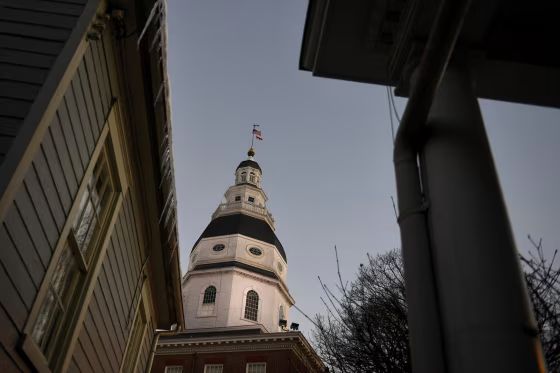
The Maryland Supreme Court has cleared the way for voters to decide in November on a proposed constitutional amendment that could pave the way for new congressional district boundaries in the state.
The ruling on Thursday overturned decisions by two lower courts that had blocked the measure from appearing on the ballot. However, the Supreme Court ordered that the wording of the ballot summary be revised before voters consider the proposal.
The decision is a significant boost for Democrats, who are seeking to counter a nationwide Republican-led redistricting push championed by President Donald Trump.
Democrats currently control seven of Maryland’s eight seats in the U.S. House of Representatives. The proposed amendment would not affect congressional boundaries for this year’s midterm elections but could give Democratic lawmakers greater latitude to redraw the districts ahead of the 2028 elections.

If approved, the changes could give Democrats an opportunity to capture the state’s only Republican-held congressional seat and potentially win all eight seats.
Maryland Democratic Governor Wes Moore had called lawmakers into a special legislative session in August to approve the amendment for submission to voters.
Reacting to Thursday’s ruling, Moore described it as a major victory for Maryland residents and the state’s democratic process.
He maintained that decisions over congressional maps should ultimately rest with voters rather than politicians, while accusing Trump and Republicans of attempting to reshape electoral rules to their advantage.
The proposed amendment would overturn the basis of a 2022 court decision that invalidated an earlier Democratic redistricting plan as an example of extreme partisan gerrymandering.
That ruling held that a constitutional requirement for congressional districts to be compact and respect natural boundaries applied to congressional maps.
Under the proposed amendment, those requirements would apply only to state legislative districts, potentially giving lawmakers greater flexibility when drawing congressional boundaries.

The change could allow congressional districts to cross the Chesapeake Bay and potentially alter the boundaries of the district represented by Republican U.S. Rep. Andy Harris, Maryland’s only Republican member of Congress and chairman of the conservative House Freedom Caucus.
The legal dispute centred on whether lawmakers followed the required procedures when placing the amendment before voters.
Republican lawmakers who challenged the measure argued that the ballot language was misleading and that the amendment violated the state constitution’s single-subject requirement.
The disputed amendment also contains a provision granting the Maryland Supreme Court original jurisdiction over lawsuits involving congressional redistricting.
The state Supreme Court rejected the argument that the amendment improperly addressed multiple subjects.
However, it agreed that part of the ballot language was misleading and ordered lawmakers to revise the wording rather than remove the measure from the ballot.
Another issue concerned a law passed earlier this year establishing a July 1 deadline for the secretary of state to certify information about statewide ballot questions to the Maryland State Board of Elections. The law also provided for 15 days for public comments.
Those deadlines had expired before lawmakers approved the redistricting amendment on August 4.

Democratic Attorney General Anthony Brown’s lawyers argued that the deadlines did not apply because lawmakers had exercised their constitutional authority to prepare the ballot summary themselves.
The state’s highest court ultimately accepted that argument.
The Maryland case is part of a broader national fight over congressional redistricting ahead of the 2026 midterm elections.
Redistricting traditionally takes place early in each decade following the release of new census figures. However, a new mid-decade battle emerged after Trump encouraged Republican-led states to redraw congressional maps in an effort to strengthen the party’s position in the House.
Republicans are seeking gains from newly enacted congressional maps in several states, while Democrats are pursuing potential gains through redistricting measures in states including California and Utah.
In May, the Virginia Supreme Court also blocked a Democratic-backed redistricting effort that could have benefited Democrats, ruling that the legislature had failed to comply with required procedures when placing the measure before voters.