RismadarVoice Reporters, June 29, 2026
A wave of Malawian migrants is streaming back from South Africa, abandoning years of hard-won savings and livelihoods after anti-foreigner attacks left many with nothing but the clothes they carried home.
Janet Kapito left her village in Lolo for South Africa in 2022, hoping to eventually save enough to buy land and build a house. Four years later, the 27-year-old mother of three has returned with her eight-month-old infant and almost nothing else, after even the few possessions she managed to pack were stolen during the journey home.
The wave of returns has been driven in part by a June 30 cut-off date circulated by anti-immigration groups in South Africa, including Operation Dudula and similar organisations. Posters, online content and public statements tied to these movements have urged undocumented foreigners to leave the country by that date, presenting it as a symbolic marker tied to broader grievances over crime, unemployment and lax immigration enforcement.

Fact-checkers have since clarified that no such government-imposed deadline exists, and that the claim spread largely through social media. South African authorities have likewise stated plainly that June 30 carries no special status and remains an ordinary working day. An Inter-Ministerial Committee statement reiterated that immigration enforcement is the exclusive responsibility of the state, to be carried out strictly within the bounds of the law, and warned that vigilante action or intimidation of foreign nationals would be prosecuted.
Despite these assurances, the fear generated by the rumours has already reshaped the lives of thousands of migrants who say the threat alone was enough to upend their plans.
“I was staying indoors after the protests started and I could not work,” Kapito said, describing how she had been earning 2,000 rand a month at a Nigerian-owned restaurant before the unrest began. She spoke quietly, her voice strained she said dust from an open field where she had taken shelter during the violence had irritated her throat. Her Malawian husband, whom she met while living in South Africa, was still making his way home at the time of the interview. After arriving at Kamuzu Stadium, where returnees are processed, she received roughly 70,000 Malawian kwacha (about $40) in support.
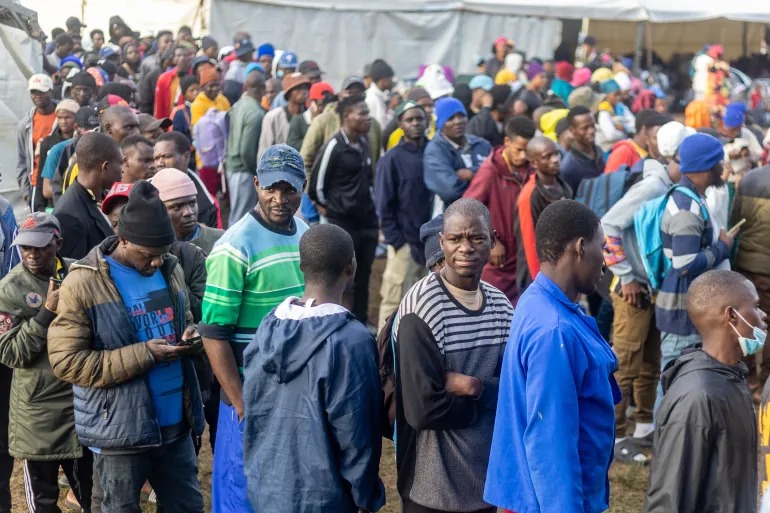
Malawi’s government is coordinating the repatriation of large numbers of citizens who had spent years working in South Africa’s informal economy, with public donations also funding buses for stranded migrants. Local reports indicate that nearly 7,000 Malawians have already returned since the exercise began.
Malawi’s Department of Disaster Management Affairs has estimated that roughly 10,000 Malawians in South Africa were in distress and said a “comprehensive response plan” had been activated to ensure their safe and orderly return. South African officials, meanwhile, say over 15,000 Malawian nationals have been processed for deportation or repatriation so far.
Many returnees told reporters they had taken out high-interest loans to fund their original journey to South Africa and were still repaying that debt when the violence forced them to flee with nothing, some sheltering in open fields in Durban as attacks escalated.
Thokozani Mphola, 33, who moved to South Africa in 2024 and worked at a groundnut-packaging factory, said leaving became a matter of survival rather than choice. She described witnessing foreign nationals assaulted in the streets and said she has no plans to return even if the unrest dies down. Having used her final paycheck to fund her trip home, she said her hopes of building a house are now on hold, though she intends to start a small business if she can raise the capital.

Community sources told reporters that spikes in anti-foreigner sentiment in South Africa have historically tended to coincide with election periods.
Among the early arrivals was Idrissah Akilemu, a father of two, whose home in Johannesburg was reportedly burned down during a nighttime raid targeting foreign nationals. He said the nature of the attacks carried out under cover of darkness rather than during daylight demonstrations convinced him the situation had escalated beyond ordinary protest. He arrived in Malawi with donated clothing, having lost virtually everything, and said he hopes to eventually save enough to start a small business.
Many returnees are reluctant to speak publicly, as deportation carries social stigma in a country already struggling with high unemployment. Aid groups expect thousands more Malawians to arrive in the coming weeks as the situation in South Africa remains unresolved.