


RismadarVoice Reporters, April 23, 2026
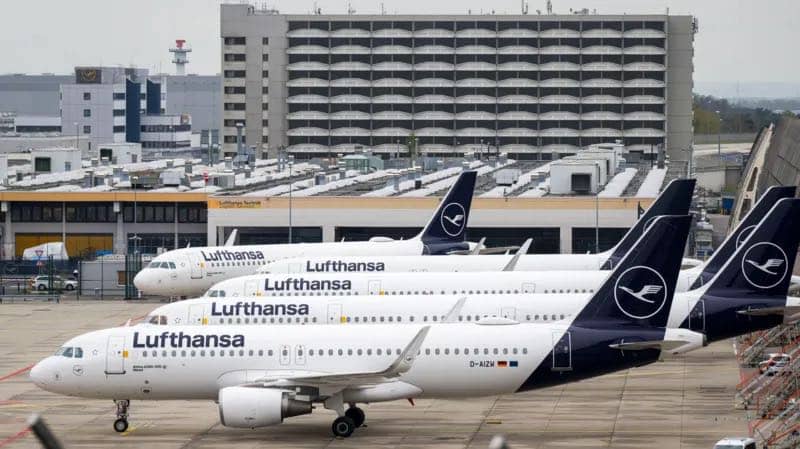
German carrier, Lufthansa has announced plans to cancel around 20,000 short-haul flights across Europe this summer, citing surging jet fuel costs which have rendered many routes financially unsustainable.
Fuel prices have sharply increased doubling since the escalation of tensions involving the United States, Israel, and Iran.
The conflict has disrupted production and supply chains across the Middle East, a critical hub for global energy exports. Lufthansa is not alone in its response. Other major airlines, including Air France–KLM and Delta Air Lines, have also scaled back operations or raised ticket prices in an effort to offset rising costs.

Industry experts warn that travellers may face even higher fares and additional cancellations if the situation persists. The Middle East supplies roughly half of Europe’s aviation fuel, much of which passes through the strategically vital Strait of Hormuz.
Ongoing geopolitical tensions have significantly restricted access to this route, tightening supply and pushing prices upward. Lufthansa estimates that its flight reductions will save about 40,000 metric tons of fuel. A large portion of the cuts will come from the shutdown of its CityLine subsidiary. As a result, several regional destinations including Heringsdorf, Cork, and Ljubljana will temporarily lose service.
Passengers affected by the cancellations will be offered refunds or rebooked on alternative flights operated by Lufthansa’s partner airlines, such as SWISS, Austrian Airlines, Brussels Airlines, and ITA Airways, where available.
The airline has indicated that some of these route changes could become permanent, as it continues to reassess its European network. Further updates are expected later this month.
Meanwhile, concerns about fuel availability are growing. The International Energy Agency recently cautioned that Europe could face jet fuel shortages within weeks. However, both government officials and airlines in the UK say they have not yet experienced supply disruptions.
In response, the European Union is preparing to launch a fuel monitoring system to track supply levels and anticipate potential shortages. Officials hope the initiative will help mitigate the aviation sector’s exposure to ongoing volatility in fuel markets.

Despite the reductions in its European operations, Lufthansa emphasised that its long-haul and global routes will remain accessible, though managed with greater efficiency in light of current challenges.