RismadarVoice Reporters
September 10, 2026
Iran could attempt to study and reverse-engineer a captured United States underwater drone, potentially providing Tehran with valuable insight into American military technology, analysts have said.
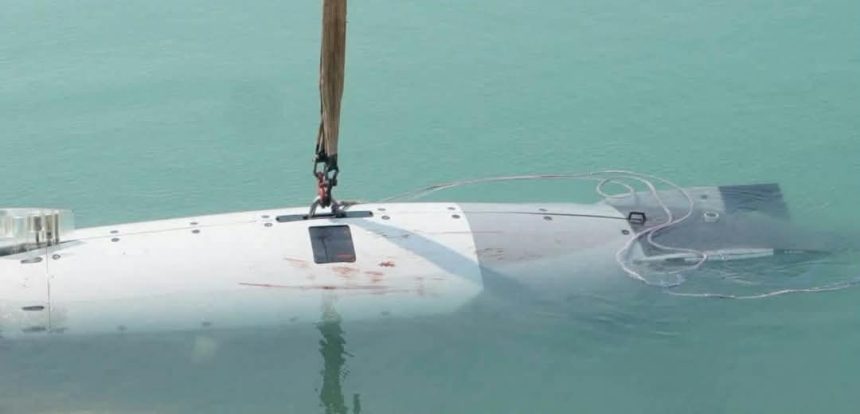
The unmanned underwater vehicle, identified as an Anduril-made Dive-LD autonomous underwater vehicle, was recovered by Iran’s Islamic Revolutionary Guard Corps near the Strait of Hormuz after the US Navy said the drone suffered a malfunction and was left disabled.
The capture has raised concerns in Washington over the possibility that Iran could examine the drone’s hardware, mechanical systems and design features, although US officials have downplayed the military significance of the incident.

US Central Command spokesperson Captain Tim Hawkins said the recovered drone was an older model that did not contain sensitive data or classified sonar and radar equipment.
However, defence analysts said Iran has a history of exploiting captured US military systems for research and propaganda purposes.
In 2011, Iran seized a US RQ-170 Sentinel stealth reconnaissance drone and later claimed it had developed domestic versions based on the aircraft’s design.
Analysts said Tehran was unlikely to gain a decisive military advantage from the underwater drone but could use the incident as a propaganda victory and an opportunity to improve its own unmanned systems.
Farzin Nadimi, a senior fellow at the Washington Institute for Near East Policy, said Iran could use the opportunity to develop improved versions of its own designs.
Bryan Clark, a senior fellow at the Hudson Institute, said Iranian engineers would likely attempt to examine the drone’s physical components, although the software systems may contain security protections.
The incident has also exposed differences between the US Navy’s description of the drone and Anduril’s public promotion of the technology.
The Navy described the Dive-LD as an older vehicle that malfunctioned before being recovered by Iranian forces, while Anduril has marketed the system as a highly reliable autonomous underwater vehicle capable of operating for up to 10 days in challenging environments.

The Dive-LD is designed for long-range surveillance and other undersea missions and has also been used as a testing platform for Australia’s Ghost Shark large underwater drone programme.
Iranian officials and diplomatic missions have mocked the US over the capture, portraying it as evidence of American technological failure and a success for Tehran.
Experts said the episode could affect Washington’s efforts to project superiority in advanced military technology, particularly in the strategic waters around the Strait of Hormuz.