


RismadarVoice Reporters, May 18, 2026
A fresh religious and political controversy has emerged in India after the Madhya Pradesh High Court ruled that the historic Kamal Maula mosque in Dhar is a temple dedicated to a Hindu goddess, intensifying longstanding debates over disputed religious sites in the country.
The ruling concerns the medieval Bhojshala complex, a protected monument in Madhya Pradesh that has been the subject of competing claims by Hindu and Muslim groups for decades.

The court’s decision followed petitions asserting that a Hindu temple existed on the site before the construction of the mosque. In its judgement, the court accepted claims recognising the structure as a temple associated with Goddess Vagdevi, also known as the Goddess of Speech.
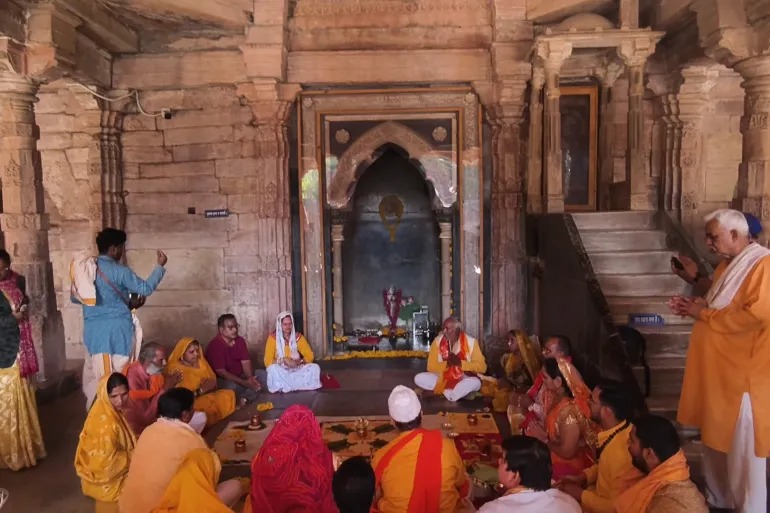
Following the verdict, large gatherings of Hindu worshippers assembled at the site, with religious rituals taking place under heightened security presence. Reports indicated that temporary idols of Hindu deities were installed within the complex as celebrations followed the judgment.
The ruling also dismissed the claims of the Muslim community over the site, although the court suggested that an alternative piece of land could be provided for the construction of a mosque elsewhere in the district.
The decision relied heavily on findings from an Archaeological Survey of India (ASI) study conducted at the site. However, the survey and its interpretation have generated criticism from scholars and legal representatives involved in the case.
Legal representatives for the Muslim community argued that historical documents recognised the site as a mosque and questioned the basis of the court’s findings.
Ashhar Warsi, one of the lawyers representing the Muslim side, described the judgment as flawed and maintained that historical records did not support claims that a temple previously occupied the site.
Muslim organisations have indicated plans to challenge the decision at India’s Supreme Court.
Historians and analysts have also expressed concern over the growing number of legal and political disputes surrounding religious sites in India.
Audrey Truschke, a historian specialising in South Asian studies, argued that historical investigations into such sites should be guided by rigorous academic standards and evidence-based methods.

Political reactions have also followed the ruling. Member of Parliament Asaduddin Owaisi criticised the judgement, warning that similar disputes involving mosques and historic structures could continue to emerge across the country.
Observers note that the latest controversy comes amid wider debates over religion, identity and heritage in India, particularly after the Supreme Court’s 2019 decision granting the disputed Babri Mosque site in Ayodhya to Hindu groups for the construction of a temple.
The Kamal Maula mosque case adds to a growing list of religious disputes involving historical monuments in India, with critics warning that such developments may deepen tensions between communities and further test the country’s secular framework.