RismadarVoice Reporters, August 27, 2026
The 36 state governors, under the aegis of the Nigeria Governors’ Forum (NGF), have rejected allegations that state governments have failed to properly account for funds accruing from the removal of fuel subsidy.
The governors said accusations over the management of proceeds from the subsidy removal should not be directed at sub-national governments.
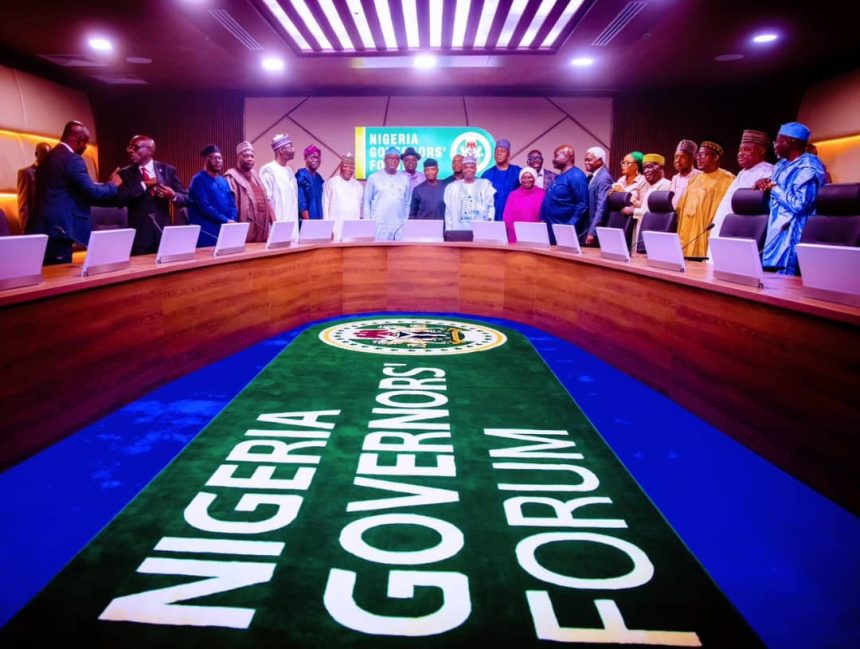
The position was made known after the NGF’s third meeting, which was held at the forum’s secretariat in Abuja from Wednesday night into the early hours of Thursday.
Speaking on behalf of the NGF Chairman, Governor AbdulRahman AbdulRazaq of Kwara State, Bayelsa State Governor Douye Diri read the communique issued at the end of the meeting.

When asked whether the forum would accept blame for alleged lack of accountability by state governments over subsidy removal funds, Diri said, “That cannot be true. That cannot be true. But we’ll leave that debate for another day.”
The governors also endorsed the proposed National Affordable CNG Transit Programme (NACTP), saying the initiative could help reduce transportation costs and ease the impact of rising inflation on Nigerians.
Diri said the governors would collaborate with the private sector to increase the number of CNG-powered vehicles in the country, noting that gas was cheaper than petrol and could therefore reduce transportation costs.
According to him, lower transportation costs would have a multiplier effect across other sectors of the economy, particularly for ordinary Nigerians.
The governor said rising transportation costs had contributed significantly to the increasing prices of food and other essential commodities.
“Transportation is key to several other factors. Say, for instance, you are talking about foodstuffs—increase in the cost of foodstuffs. They will tell you that ‘I’m moving from point A to point B, the transport cost is XY.’

“And so for that reason, the cost of my yam, the cost of my garri… And so by the time you reduce the cost of transport, as I said earlier, it will have a multiplier effect on several others,” the NGF stated.
The proposed NACTP is designed to translate the lower operating costs of CNG vehicles into reduced fares for commuters.
The programme envisages state government support for vehicle conversions, CNG-powered fleets and related infrastructure, alongside fare commitments from participating transport operators.
The governors noted the potential of the initiative to ease transportation costs but agreed that its financing and implementation framework required further consideration.
Asked about the timeline for implementing the programme, Diri said the details would be worked out between the governors and the proponents of the initiative.
Meanwhile, the governors received a presentation from the Minister of Industry, Trade and Investment, Dr Jumoke Oduwole, on opportunities for state participation in CANEX Weekend 2026 and the Intra-African Trade Fair (IATF) 2027, both scheduled to take place in Lagos.
The forum said the platforms could help states showcase investment-ready projects, promote local exports and tourism, and connect state-based micro, small and medium enterprises with African and international investors and buyers.

The governors expressed their collective support for the initiatives and pledged to work with the minister to achieve the objectives.
On the impact of fuel subsidy removal, Diri said the NACTP was among measures being considered to cushion the effects of the reform on Nigerians.
He said reducing transportation costs through CNG adoption could help ease the burden created by the removal of fuel subsidies and its effect on the prices of goods and services.
According to Diri, the governors’ collaboration with the private sector on CNG adoption was aimed at ensuring that the benefits of cheaper gas translated into lower transportation costs and ultimately improved living conditions for Nigerians.