RismadarVoice Reporters
October 16, 2026
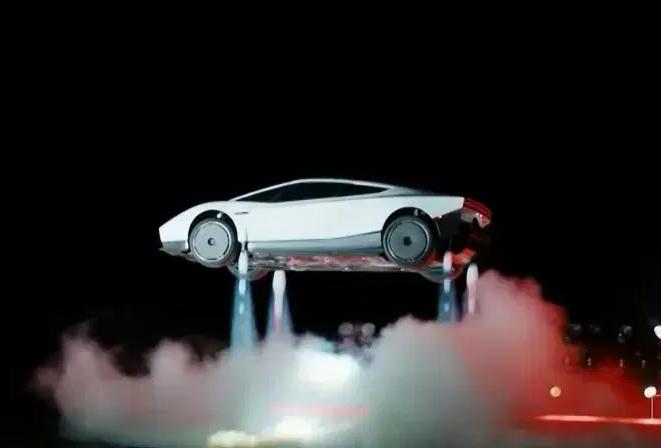
American electric vehicle manufacturer Tesla has unveiled a redesigned version of its long-awaited Roadster sports car, introducing experimental technology that allows the vehicle to perform brief aerial manoeuvres using thrusters developed in collaboration with SpaceX.
The unveiling took place on Thursday, October 15, at SpaceX’s rocket development and testing facility in McGregor, Texas, where Tesla Chief Executive Officer Elon Musk demonstrated the vehicle’s unusual capabilities.
During the demonstration, the prototype climbed a curved ramp, travelled upside down using a powerful suction system, performed an aerial flip and landed with the assistance of compressed-gas thrusters.
The vehicle also demonstrated its ability to lift itself over several other Tesla vehicles, attracting attention over its potential to redefine high-performance electric transportation.

However, despite the spectacular display, questions remain about the vehicle’s safety, commercial availability and ability to perform such manoeuvres under normal driving conditions.
Here are five important things to know about Tesla’s latest Roadster.
- IT USES SPACEX-INSPIRED THRUSTERS TO PERFORM AERIAL MANOEUVRES
The new Roadster incorporates cold-gas thrusters developed through collaboration between Tesla and SpaceX, Musk’s aerospace company.
Unlike conventional rocket engines that rely on combustion, the system uses highly pressurised gas to generate thrust, allowing the vehicle to briefly lift off the ground and perform controlled movements in the air.
Tesla’s engineering team disclosed that the experimental system incorporates 10 thrusters connected to approximately 600 litres of compressed air.
During the demonstration, the Roadster used the technology to execute an aerial flip before returning to the ground.
However, the prototype’s ability to perform brief aerial manoeuvres does not establish that it can sustain long-distance flight or operate as a conventional aircraft.

- TESLA CLAIMS IT CAN ACCELERATE FROM ZERO TO 60 MPH IN LESS THAN ONE SECOND
One of the most remarkable features demonstrated at the unveiling was the Roadster’s acceleration capability.
Tesla reported that the vehicle could accelerate from zero to 60 miles per hour, approximately 97 kilometres per hour, in less than one second with the assistance of its thruster technology.
Reports from the event put the demonstrated acceleration at approximately 0.81 seconds, potentially placing the vehicle among the fastest-accelerating cars ever demonstrated.
The company also outlined ambitions for a top speed exceeding 230 miles per hour, equivalent to approximately 370 kilometres per hour.
However, these figures remain manufacturer-reported performance claims and have not been independently verified for a commercially available production vehicle.

- THE ROADSTER WILL COME IN THREE CONFIGURATIONS
Tesla has outlined three configurations of the redesigned Roadster, each intended to offer different levels of performance and technological capability.
The Performance configuration is designed primarily for conventional road use. It features active aerodynamics and a suction system intended to improve grip and vehicle control.
The Thrust configuration introduces rear-mounted compressed-gas thrusters designed to deliver extraordinary acceleration and enhanced performance.
The Rocket configuration represents the most experimental version, incorporating additional thrusters capable of supporting aerial manoeuvres.
Unlike the other versions, the Rocket configuration is designed as a single-seater and will be offered by invitation only.
Tesla has also indicated that the Rocket version’s aerial capabilities are not approved for use on public roads.

- PRODUCTION IS EXPECTED TO BEGIN IN 2028
Although Tesla first unveiled plans for its next-generation Roadster in 2017, the project has experienced repeated delays.
During the October 15 presentation, Musk announced that the company was targeting 2028 for the commencement of production.
The announcement means customers may still have to wait approximately two years before the redesigned vehicle becomes commercially available.
Tesla has previously missed several production targets for the Roadster, making the latest timeline subject to further changes.
The company has not provided a firm delivery schedule for all three configurations.

- RESERVATION PAYMENTS REACH $250,000
Tesla has reopened reservations for the redesigned Roadster, with substantial deposits required from prospective customers.
The Performance configuration requires a reservation payment of $50,000, while customers interested in the more advanced Thrust version must pay $250,000.
The Rocket configuration, which offers the most ambitious aerial capabilities, is available by invitation only.
Importantly, these amounts represent reservation payments rather than confirmed final purchase prices.
Tesla has not announced definitive retail prices for all configurations, leaving prospective buyers uncertain about the total cost of ownership.
The reservation requirements nevertheless reflect the company’s intention to position the Roadster as an exclusive, high-performance electric sports car.
SAFETY AND REGULATORY QUESTIONS REMAIN
Despite the attention generated by the unveiling, significant questions remain about the practicality and safety of the Roadster’s experimental technology.
The ability to lift a road vehicle into the air introduces engineering and regulatory challenges, particularly concerning vehicle stability, passenger protection and the safe operation of thrusters in public environments.
Musk acknowledged during the presentation that the prototype was not necessarily designed primarily around conventional safety expectations.
It also remains unclear whether every capability demonstrated during the unveiling will be included in vehicles eventually delivered to customers.
While Tesla’s latest demonstration represents an ambitious attempt to combine electric vehicle engineering with aerospace technology, the Roadster’s commercial success will depend on the company’s ability to transform its experimental prototype into a reliable and legally compliant production vehicle.