RismadarVoice Reporters
November 6, 2026
The Economic and Financial Crimes Commission (EFCC) has reportedly secured a final forfeiture order for $163,592 linked to an alleged international fraud scheme involving the impersonation of a former employee of a United States-based company.
The order was said to have been granted on Friday by Justice M. S. Liman of the Federal High Court, Abuja, following an application presented by the commission’s prosecution team, led by Ekele Iheanacho, SAN.
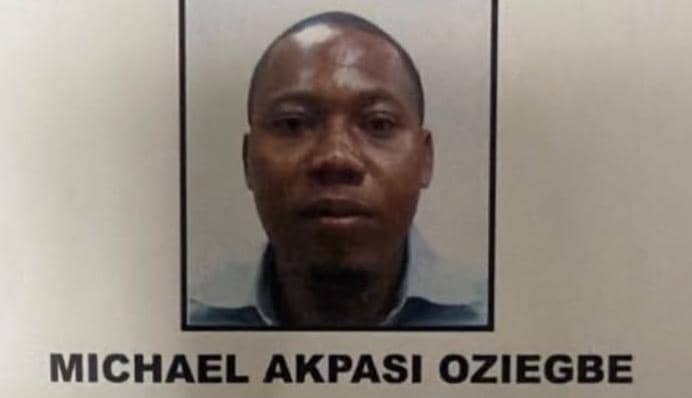
According to the EFCC’s account, the funds were traced to a domiciliary account belonging to Micoz Bluelink Enterprise, operated by Akpasi Michael Oziegbe.
Investigators alleged that Oziegbe impersonated Edward Campbell, a former employee of Applied Industrial Technologies, to obtain a purported settlement payment through the American law firm Steven J. Mandel & Co.
The commission said the law firm received a request for legal representation on June 27, 2022, from an individual claiming to be Campbell, who had reportedly sustained an injury during his employment.
The individual allegedly claimed that his former employer had failed to honour a settlement agreement.
According to the investigation, the law firm subsequently received what appeared to be a settlement cheque valued at $165,157.

Following instructions from the purported beneficiary, the firm transferred $163,592 to a designated account on July 20, 2022.
The funds were subsequently credited to Micoz Bluelink Enterprise’s domiciliary account with United Bank for Africa.
However, JPMorgan Chase Bank reportedly notified the law firm the following day that the cheque had been altered and was fictitious.
The incident was subsequently reported to American law enforcement authorities, including the Federal Bureau of Investigation.
The EFCC said UBA flagged the transaction as suspicious and restricted access to the funds following verification and a refund request.
Oziegbe later petitioned the anti-graft agency, alleging misconduct by bank officials and maintaining that the money represented payment for materials supplied to an American company.
Investigators said he failed to provide sufficient documentation supporting that explanation.

The commission consequently sought forfeiture of the disputed funds.
According to the reported ruling, the court found that Oziegbe had not established a legitimate entitlement to the money and ordered its final forfeiture to the Federal Government.
The proceeding was described as non-conviction-based asset forfeiture, meaning the reported order concerns ownership and recovery of the funds rather than a criminal conviction of Oziegbe.