RismadarVoice Reporters
October 31, 2026
Former President Olusegun Obasanjo has criticised President Bola Ahmed Tinubu’s defence of government borrowing, warning that excessive public debt could undermine Nigeria’s economic future and impose financial burdens on generations yet unborn.
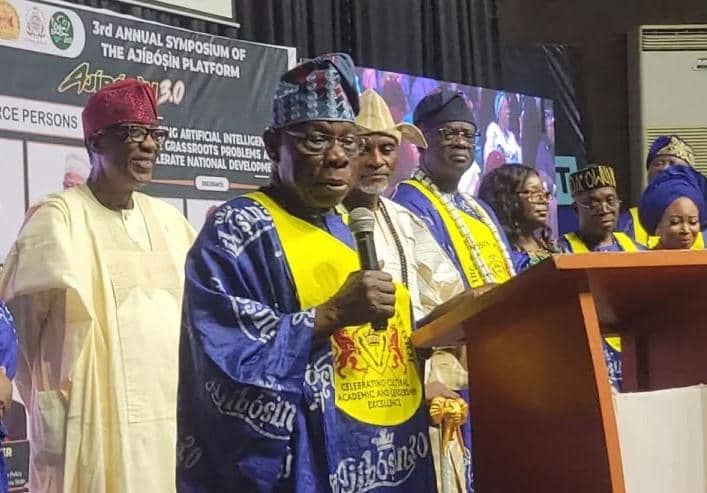
Obasanjo made the remarks on Friday, October 30, during the third Ajibosin Annual Symposium held at the Olusegun Obasanjo Presidential Library in Abeokuta, Ogun State.
The former president reacted to Tinubu’s earlier assertion that borrowing was not leprosy and that his administration would continue to take on loans when necessary, provided the government could meet its repayment obligations.
Obasanjo rejected the comparison, describing it as “absolute nonsense” and arguing that excessive borrowing could have consequences extending beyond the present generation.
“Debt is worse than leprosy,” he declared, questioning Nigeria’s rising debt obligations and the country’s economic management.
His comments followed Tinubu’s renewed defence of external borrowing to finance infrastructure, healthcare, education and other development projects.

The President had maintained that the economic value generated from borrowed funds should determine whether such financing was justified.
Obasanjo, however, questioned Nigeria’s economic performance, particularly naira depreciation and the country’s continued dependence on external financial institutions.
He criticised the influence of the World Bank and International Monetary Fund, arguing that their economic recommendations did not always reflect Nigeria’s development priorities.
The former president recalled discussions with former British Prime Minister James Callaghan concerning agricultural subsidies, questioning why developing countries were discouraged from supporting domestic production while advanced economies subsidised their farmers.
Obasanjo, whose administration negotiated approximately $18 billion in Paris Club debt cancellation in 2005, emphasised the need for responsible economic management and policies that protect future generations.
Turning to artificial intelligence, he warned against adopting emerging technologies without understanding their implications or developing adequate domestic safeguards.
He maintained that Nigeria should determine how AI could support national development rather than depend entirely on foreign-controlled technological systems.

Also speaking at the symposium, historian and political commentator Dr Umar Ardo warned that Africa risked another form of economic dependence if it failed to control its data, digital infrastructure and intellectual property.
Ardo acknowledged AI’s economic potential but called for greater African ownership, local expertise and investment in technological infrastructure.
The symposium examined how artificial intelligence could address grassroots challenges while supporting sustainable national development.