

RismadarVoice Reporters
September 24, 2026
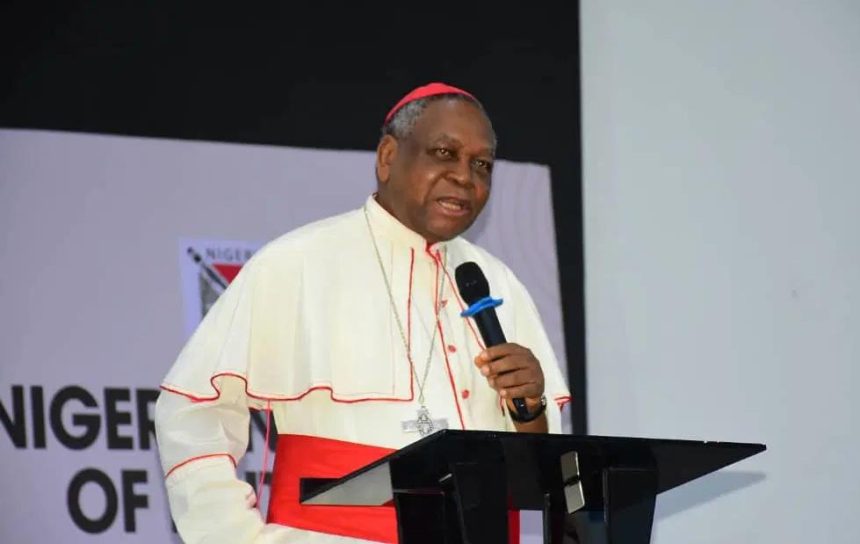
Archbishop Emeritus of Abuja, Cardinal John Onaiyekan, has called for electoral reforms and stronger democratic institutions to ensure that Nigeria’s government reflects the genuine choices of citizens and serves the common good.
Onaiyekan spoke on Thursday while delivering the keynote address at the 22nd All Nigeria Editors Conference, organised by the Nigerian Guild of Editors in Enugu.
The two-day conference, holding from September 24 to 25, is themed, “The Ballot, the Media and the Task of Keeping Democracy Alive,” with the sub-theme, “When Lies Look Real: Detecting and Debunking AI Disinformation Before, During and After Election.”

The Cardinal said democracy could remain fragile where elections failed to reflect the genuine choices of citizens, stressing that poor democratic practices should not be regarded as inevitable.
According to him, the ultimate objective of democracy should be a government freely chosen by the people and committed to promoting their welfare and the common good.
Onaiyekan expressed concern over the increasingly intense nature of elections in Nigeria, saying political contests were often treated as battles for power, wealth and influence, with ordinary citizens caught in political struggles.
He also raised questions about the independence of the Independent National Electoral Commission, arguing that its relationship with the executive, including the process of appointing its leadership, presented challenges to perceptions of its independence.
The cleric called for a new method of appointing the INEC chairman and commissioners to strengthen the electoral body’s institutional independence.
He also criticised the alleged use of government resources for partisan political activities and called for a political environment that provides competing interests with fair opportunities.
Onaiyekan expressed concern about claims by political leaders that they could deliver entire states to particular candidates, questioning how such declarations aligned with the individual right of citizens to freely choose their representatives.
He also cautioned against excessive deployment of security personnel during elections, saying an overly militarised environment could intimidate voters.

Among his proposed electoral reforms was the establishment of a special election tribunal with a clearly defined timeframe for resolving disputes.
He argued that major election petitions should ideally be concluded before successful candidates assume office and proposed allowing ordinary voters whose votes were affected to challenge election outcomes through the courts.
Onaiyekan also advocated independent candidacy, particularly at the local level, as a means of reducing the influence of political parties and political powerbrokers.
He proposed requiring presidential candidates to secure at least 50 per cent of votes cast, with a run-off between the two leading candidates where no contender reaches the threshold.
The Cardinal further proposed stricter rules for elected lawmakers who defect from the political parties on whose platforms they secured their mandates, suggesting that such legislators should return to their constituencies to seek fresh mandates.
Turning to the media, Onaiyekan said journalists had an important responsibility to sustain democracy by informing citizens and holding public officials accountable.
He urged the media to report government policies fairly while maintaining the independence required to scrutinise those policies and the conduct of public officials.
The Cardinal also warned that artificial intelligence presented opportunities as well as new challenges for journalism, particularly as the country approaches another electoral cycle.
He urged journalists to maintain professional standards and exercise their freedoms responsibly in the interest of democratic development.

Onaiyekan also called on Christian and Muslim leaders to promote justice, accountability and good governance rather than seek political patronage.
He maintained that the quality of leadership produced by Nigeria’s political system remained crucial and urged public officials to demonstrate honesty, commitment to the common good and respect for the rule of law.
The Cardinal reiterated that democracy should ultimately produce a government freely chosen by citizens and committed to serving the people.