RismadarVoice Reporters, July 21, 2026
An Australian family is celebrating the birth of an exceptionally rare set of identical quadruplet girls, a medical occurrence doctors estimate happens in only one out of every 15 million pregnancies.
Jenitar and Jortham Na’amoana welcomed their four daughters on July 14 at the Royal Brisbane and Women’s Hospital in Brisbane, Australia, after a closely monitored high-risk pregnancy.
The babies Emily, Harriet, Catherine and Alexa were delivered by Caesarean section at 28 weeks and four days after their mother was admitted to the hospital at 25 weeks of pregnancy for specialist care.

One of the newborns received a particularly meaningful name, while the couple named Alexa in honour of Dr Alexa Bendall, the maternal-fetal medicine specialist and obstetrician who supervised the pregnancy from start to finish.
In the Dre vein, Dr Bendall described the gesture as a touching tribute.
The medical expert said the four girls are monozygotic quadruplets, meaning they all developed from a single fertilised egg that split into four separ, ate embryos, a phenomenon considered one of the rarest forms of multiple births.
Doctors estimate the chances of naturally conceiving identical quadruplets at approximately one in 15 million, making the birth an extraordinary medical event.
According to Dr Bendall, the delivery could be the first recorded case of spontaneous identical quadruplets in Australia, noting that only a handful of similar cases have been documented worldwide.
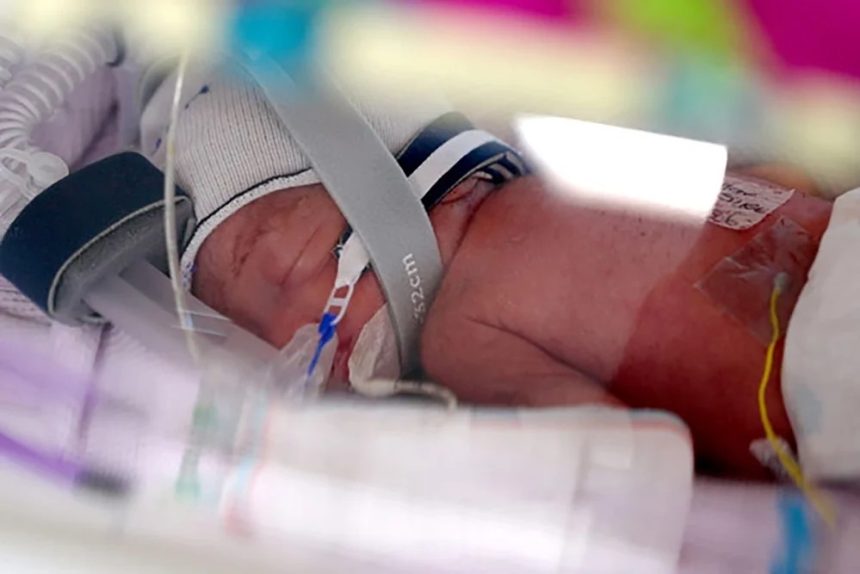
Although born prematurely, the babies are reported to be making encouraging progress and will remain in the hospital’s Neonatal Intensive Care Unit (NICU) until they reach full-term developmental milestones.

The couple already have four children aged between one and 10 years, bringing their family to eight children. They are now planning to purchase a 10-seater vehicle to accommodate their growing household.
Doctors also lauded Jenitar’s resilience throughout the pregnancy, describing her recovery and the babies’ condition as remarkable despite the significant risks associated with carrying identical quadruplets.
Medical staff say both mother and daughters are doing well as they continue receiving specialised care.