RismadarVoice Reporters
September 1, 2026
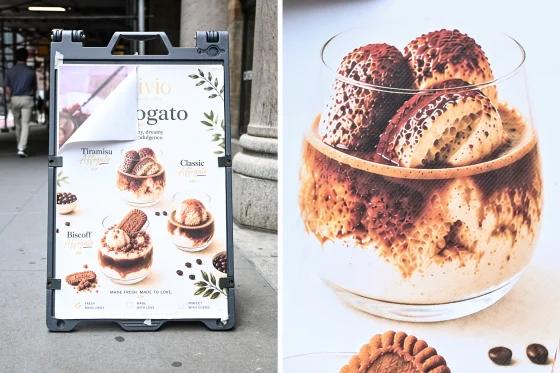
Strange-looking images of food created with artificial intelligence are increasingly appearing on menus, storefronts and delivery platforms, as small businesses turn to cheaper digital tools to promote their products.
The trend, often described online as “AI slop,” has taken an unusual turn as businesses begin using AI-generated illustrations to advertise meals and drinks in the physical world.
Some of the images are difficult to mistake for computer-generated creations. Advertisements have featured shrimp that resemble miniature flotation devices, breakfast burritos with unsettling-looking fillings and supposedly high-protein meals covered in shapes that appear almost insect-like.
In one case, a social media user said she tried ordering a product displayed on a café’s outdoor menu, only to discover that the item was not actually sold there. The image had reportedly been generated using ChatGPT.

The growing use of AI artwork reflects two trends occurring at the same time: increasingly accessible image-generation technology and continued pressure on small businesses to control costs.
AI tools can produce promotional graphics, logos and advertisements at little or no cost, making them particularly attractive to businesses operating with limited budgets.
Paul Shovlin, an assistant professor of English at Ohio University who researches artificial intelligence, said many of the businesses using such imagery are likely small or family-run operations.
He suggested that financial constraints may explain why some owners choose AI-generated artwork instead of paying professional designers.
But the growing use of AI-generated visuals has frustrated established designers, who say the technology is taking away work while sometimes producing material that requires additional correction.
Daniel Silva, owner of Miami-based graphic design firm Silva Heeren, said some customers arrive believing AI-generated designs are ready for professional use, only to discover problems with file formats, resolution and other technical requirements.
“ChatGPT will tell the user that their design is genius,” Silva said, arguing that customers often discover later that fixing the work can be costly.
Silva said demand from small-business and do-it-yourself customers has fallen as AI tools have become more popular. His response, he said, has been to change the services his company offers.
“We no longer sell creativity,” Silva said. “We sell experience.”
The use of AI-generated food imagery has also triggered reactions beyond the design industry.
A San Francisco coffee shop reportedly spent hundreds of dollars removing graffiti after its use of AI-generated food images on its building attracted criticism, according to SFGate.
Lyndsey Lozano, a co-owner of the business, questioned why the imagery had generated such a strong response.
Other businesses have taken the opposite approach, emphasising that their promotional material is created by humans.
At Chugwater Soda Fountain in Wyoming, co-owner Jill Winger shared a photograph of her daughter holding a handwritten sign declaring that the business would not use AI-generated flyers or photographs for promotion. The post attracted about 119,000 likes.

Winger has said she is not completely opposed to artificial intelligence and uses some AI tools when planning large-scale cooking operations. However, she believes resistance to the technology is growing as its presence becomes more widespread.
The sentiment is part of a broader debate over AI’s impact on work and creative industries. Growing criticism has emerged alongside political opposition and concerns among workers about the technology’s effect on jobs.
Some businesses are also reconsidering how much AI-generated content they publish online. Brad Olesen, chief content officer at financial website Benzinga, recently said the company was reducing its reliance on AI-written material and placing greater emphasis on human authors.
The debate suggests that while AI may offer businesses a cheaper way to produce marketing material, consumers and creative professionals are increasingly questioning whether lower costs are worth sacrificing authenticity.
As Winger put it, “I’m seeing which way the pendulum is swinging.”