RismadarVoice Reporters
October 29, 2026
Hospitals across Yemen are struggling to cope with rising casualties as renewed fighting between the internationally recognised government and Houthi forces deepens the country’s humanitarian crisis.
Medical facilities in Taiz, Marib and along the Red Sea coast are experiencing severe shortages of essential supplies, including medicines, oxygen, surgical equipment, anaesthetics and fuel.
According to Reuters, hospitals near the front lines are treating hundreds of wounded civilians and combatants, with some facilities receiving as many as 700 war casualties within a single week.
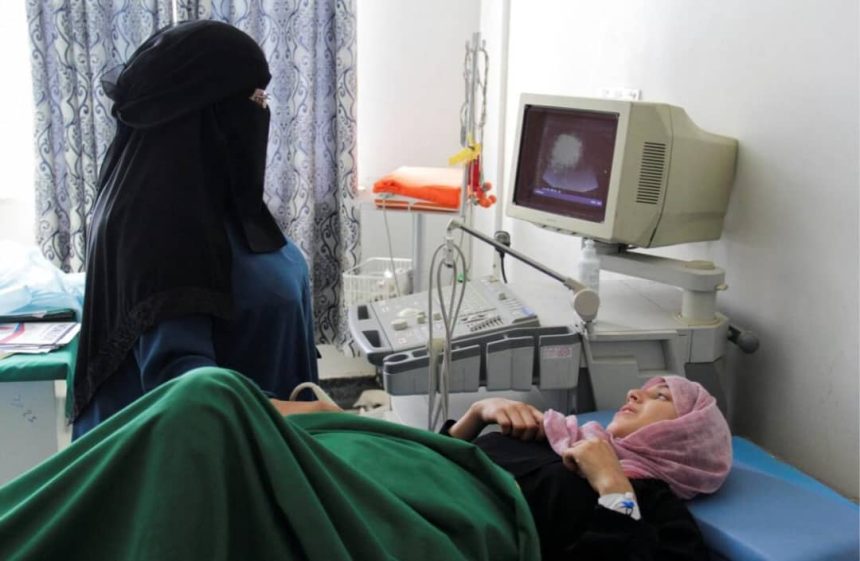
Among the victims is 25-year-old Amal al-Sabri, a pregnant mother of two who was shot in the abdomen while trapped in her home in al-Shaqb village, near Taiz.
The bullet lodged near her spine, leaving her unable to move. She reportedly remained inside her home without food or water for two days before receiving medical attention.
Doctors at Al-Thawra Hospital said her pregnancy complicated efforts to examine and remove the bullet, raising serious concerns about her health and that of her unborn child.

The International Committee of the Red Cross warned that Yemen’s healthcare system was approaching collapse as medical facilities struggled with increasing casualties and dwindling resources.
Its spokesperson, Hachem Osseiran, said more than 40 per cent of the country’s hospitals and healthcare facilities were already closed or operating at reduced capacity before the latest escalation.
Humanitarian agencies also reported that approximately 281,000 people had been newly displaced across Yemen since early August, with Taiz accounting for about half of those affected.
The governorate has remained largely isolated since October 3, as fighting restricts humanitarian deliveries and prevents civilians from leaving affected communities.
The crisis has also disrupted maternal healthcare, with some hospitals converting maternity wards into emergency treatment centres for people suffering gunshot wounds and blast injuries.
Health workers are increasingly facing difficult decisions over which patients to treat first because of limited medical resources.
Meanwhile, healthcare facilities and emergency responders have come under attack.

The United Nations reported that a hospital in Taiz’s Sabir Al-Mawadim district was struck by mortar fragments, while another attack on an ambulance killed its driver and a paramedic.
A separate strike near Mocha General Hospital damaged the facility and caused panic among patients.
Medical charity Médecins Sans Frontières warned that continued attacks near healthcare facilities were discouraging civilians from seeking treatment.
Aid organisations have called for the protection of medical workers, unhindered humanitarian access and urgent measures to prevent further deterioration of Yemen’s healthcare system.