RismadarVoice Reporters
October 22, 2026
Qatar and France have called for the restoration of unrestricted maritime navigation through the Strait of Hormuz and the full implementation of the Gaza ceasefire as diplomatic efforts intensify to address security challenges across the Middle East.
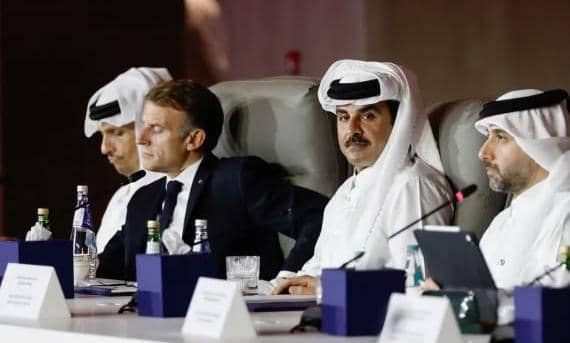
The appeal followed high-level talks between Qatar’s Emir, Sheikh Tamim bin Hamad Al Thani, and French President Emmanuel Macron during the latter’s state visit to Doha from October 20 to 21.
In a joint statement issued on Wednesday, both leaders expressed concern over regional tensions and emphasised the importance of resolving disputes through dialogue and diplomatic engagement.
The two countries called for freedom of navigation through the Strait of Hormuz without restrictions or additional charges, stressing the importance of maintaining stability in international energy supplies.
They also condemned Iranian military attacks against countries in the region, describing the actions as violations of international law.
Macron reaffirmed France’s solidarity with Qatar and commended Doha’s diplomatic efforts to reduce tensions involving Iran.
Both governments expressed support for negotiations aimed at ensuring that Iran’s nuclear programme remains exclusively peaceful.
Addressing the situation in Gaza, the leaders demanded full compliance with existing ceasefire arrangements, including the withdrawal of Israeli forces in accordance with agreed provisions.

They also called for the immediate, safe and unhindered delivery of humanitarian assistance to civilians affected by the conflict.
The renewed appeal comes amid worsening humanitarian concerns in Gaza, where the United Nations World Food Programme recently reported that approximately 1.4 million people were experiencing acute food insecurity at crisis levels or worse.
The agency also warned that funding shortages had forced reductions in food assistance, leaving hundreds of thousands of vulnerable residents without previously available support.
Qatar and France reaffirmed their commitment to a two-state solution to the Israeli-Palestinian conflict, supporting the establishment of an independent Palestinian state alongside Israel.
They further rejected any annexation of the occupied West Bank and called for an end to Israeli settlement expansion and violence involving settlers.
On Lebanon, both countries expressed support for the implementation of the Trilateral Framework Agreement aimed at restoring Lebanese sovereignty, disarming Hezbollah and securing the complete withdrawal of Israeli forces.
They warned that the expiration of the United Nations peacekeeping mission’s mandate should not create a security vacuum capable of destabilising Lebanon and neighbouring countries.
The leaders also pledged to cooperate on stabilisation and economic recovery initiatives in Syria, working with the country’s authorities.

Beyond regional security, Qatar and France agreed to deepen bilateral cooperation in defence, energy, cybersecurity, investment and economic development.
The discussions formed part of Macron’s wider diplomatic engagement with Gulf countries, focusing on regional stability, energy security and strategic partnerships.
Both governments maintained that sustained international cooperation and diplomatic engagement remained essential to preventing further escalation and promoting lasting peace across the Middle East.