RismadarVoice Business
September 19, 2026
The United States and China are discussing a possible reduction or removal of Chinese tariffs on American liquefied natural gas (LNG), as both countries work towards a broader trade package ahead of a planned meeting between Presidents Donald Trump and Xi Jinping next week.
People briefed on the negotiations said the LNG proposal forms part of discussions under which Washington and Beijing could each reduce tariffs covering about $30 billion worth of goods, including energy and agricultural products.
The negotiations remain ongoing, and no final agreement has been announced.
China imposed a 15 per cent tariff on US LNG in February 2025 in response to American duties on Chinese goods. The measure effectively brought what had been a rapidly expanding LNG trade between the two countries to a halt.

The latest negotiations are taking place ahead of a planned September 24 meeting between Trump and Xi, where a wider package of trade and economic agreements could emerge.
US LNG INDUSTRY SEEKS CHINESE MARKET
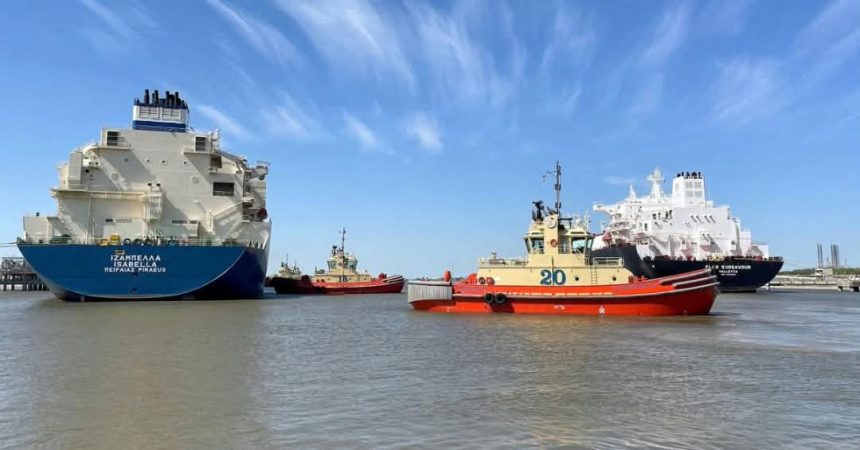
A restoration of large-scale LNG trade with China could provide an important market for American producers as substantial new export capacity comes online along the US Gulf Coast.
US LNG export capacity is expected to increase by approximately 10 billion cubic feet per day through 2027, driven by new and expanded export facilities.
Industry estimates indicate that nearly 100 million metric tonnes of LNG production capacity is currently under construction in the United States, with about 24.5 million tonnes yet to be secured under long-term customer contracts.
China, meanwhile, remains one of the world’s biggest LNG markets, while the United States is the world’s largest exporter of the fuel.

US government figures show the scale of the disruption caused by the tariff dispute. American LNG shipments to China fell from 64 vessels in 2024 to effectively zero in 2025 after Beijing introduced the additional tariff.
Trade had previously reached as many as 131 vessels in 2021.
There are signs that commercial activity may already be beginning to recover, with several LNG cargoes leaving US Gulf Coast terminals for China in recent months despite the tariff remaining in place.
GLOBAL ENERGY FLOWS SHIFT
The negotiations come as geopolitical conflicts continue to reshape global gas markets.
Europe became an increasingly important destination for American LNG after Russia’s invasion of Ukraine disrupted traditional Russian pipeline gas supplies.
More recent instability in the Middle East has further affected global energy flows and increased competition for LNG cargoes in Asian markets.
US LNG exports averaged about 17.4 billion cubic feet per day during the first half of 2026, representing a 23 per cent increase from the same period a year earlier.
A reduction or elimination of China’s tariff could reopen a major destination for growing American LNG supplies, although the proposed tariff changes and wider trade package remain under negotiation ahead of the Trump-Xi meeting.