RismadarVoice Reporters
September 8, 2026
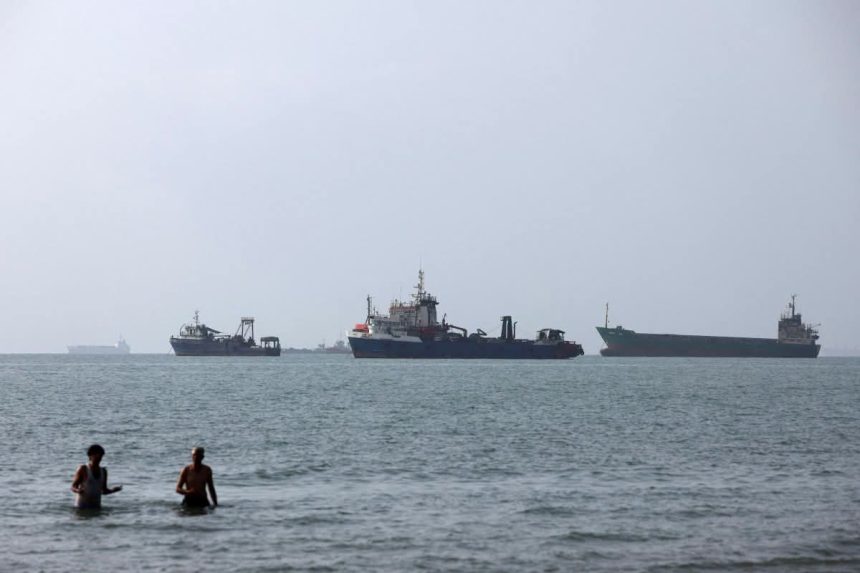
Global oil prices have climbed to near six-week highs as escalating military tensions between the United States and Iran raise concerns over possible disruptions to energy supplies passing through the Strait of Hormuz, one of the world’s most important oil shipping routes.
Brent crude futures, the international benchmark, rose to around $97 per barrel on Monday, gaining about 9 percent overper centst five days and 19 percent overper centst month. The increase brought prices close to their highest level since July 24, when Brent traded above $97.93 per barrel.
US West Texas Intermediate (WTI) crude also increased, reaching $92.27 per barrel after gaining 79 cents.

The price surge followed a series of military exchanges in the Strait of Hormuz, where the United States and Iran have intensified attacks in recent days. The US reportedly struck three Iranian oil tankers on Saturday, while Iran’s Islamic Revolutionary Guard Corps (IRGC) said it had targeted three tankers and three vessels linked to the United States in other locations.
Energy analysts said the continued hostilities were contributing to concerns over global supply shortages.
“This is a reflection of continued conflict and exchange of fire. The supply deficits globally are persisting, and there is little end to these shortages,” Rachel Ziemba, an adjunct senior fellow at the Centre for American Security, said.
The situation has also affected shipping activity through the Strait of Hormuz, a narrow waterway through which a significant portion of global oil supplies passes. Data from energy analytics firm Kpler showed that an average of about 10 commodity vessels crossed the route daily over the past 10 days, indicating reduced traffic amid security concerns.
Saudi Arabia’s energy sector has also faced pressure, with reports indicating that Saudi Aramco’s Jizan facilities were struck for the second time in a month, adding further uncertainty to the market.
Analysts said prolonged disruptions could continue to influence oil prices, particularly if attacks and security threats persist.

Meanwhile, higher energy costs are affecting consumers in the United States, where petrol prices have increased. The national average price for petrol reached $4.15 per gallon on Monday, up from $4.08 a week earlier, according to the American Automobile Association (AAA).
Diesel prices have also risen sharply, reaching record levels, increasing concerns that higher transportation costs could eventually affect prices of goods and services.
The impact of rising oil prices has also become a political issue in the United States ahead of the country’s midterm elections, with economic concerns emerging as a major issue among voters.
China, meanwhile, has moved to reduce its exposure to global oil disruptions by increasing reliance on domestic energy sources, tapping strategic reserves and accelerating its transition toward renewable energy and electric vehicles.
Experts said China’s close energy relationship with Russia and its growing electric vehicle market could help reduce the impact of rising global oil prices on its economy.