

RismadarVoice Reporters, August 7, 2026
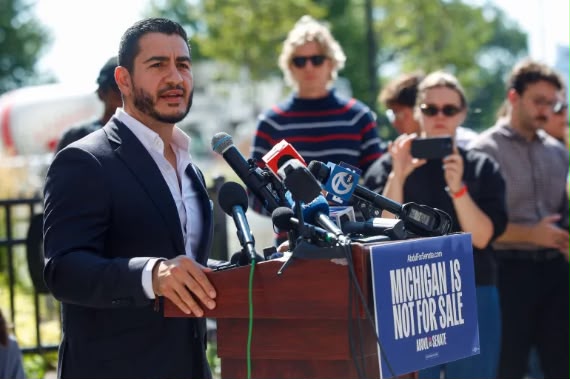
Abdul El-Sayed’s victory in the Democratic primary for Michigan’s United States Senate seat has been described by supporters and progressive figures as a major upset, after the public health advocate overcame a well-funded campaign backed by prominent party figures and pro-Israel groups.
El-Sayed narrowly defeated four-term Congresswoman Haley Stevens in Tuesday’s primary, despite Stevens enjoying the backing of several influential Democrats, including Michigan Governor Gretchen Whitmer, former Senator Debbie Stabenow, Senate Democratic Leader Chuck Schumer and retiring Senator Gary Peters.
His victory also came despite millions of dollars reportedly spent by the American Israel Public Affairs Committee (AIPAC) and allied groups to support candidates opposed to his campaign.

Addressing supporters in Detroit after midnight as the results were still being counted, El-Sayed acknowledged the scale of the challenge facing his campaign, noting that his opponents had deployed substantial financial resources against him.
The final result, announced hours later, gave El-Sayed a narrow win and secured his place on the Democratic ticket for November’s general election.
The outcome has attracted national attention, particularly because El-Sayed ran as a progressive candidate advocating healthcare expansion, economic relief for working families and reduced influence of money in politics.
Michigan State Representative Alabas Farhat, one of El-Sayed’s supporters, said the result demonstrated growing voter appetite for candidates willing to challenge established political interests.
Farhat argued that voters were increasingly looking beyond traditional party endorsements and were responding to candidates offering what he described as bold policies aimed at addressing economic pressures facing ordinary families.
Stevens’ defeat means El-Sayed will face former Republican Congressman Mike Rogers in the November general election. Rogers has received the backing of President Donald Trump and is expected to attract support from pro-Israel organisations.
AIPAC has already indicated that it intends to remain involved in the Michigan contest, signalling that it will campaign against El-Sayed in the general election.
The organisation criticised his political positions and said it would continue supporting candidates it considers supportive of a strong US-Israel relationship.
The Michigan result has also been celebrated by prominent figures on the Democratic Party’s progressive wing.
Senator Bernie Sanders described El-Sayed’s primary victory as one of the most remarkable outcomes in recent American politics, pointing to the disparity between the financial resources available to the two campaigns.
El-Sayed’s win was part of a wider series of victories by progressive candidates in Michigan and other states during the current primary season.
State legislator Donavan McKinney defeated incumbent Congressman Shri Thanedar in a Democratic primary, while climate activist William Lawrence also secured a congressional nomination in another Michigan district.
Progressive candidates have similarly recorded victories in several other states, strengthening the influence of the Democratic Party’s left wing.
El-Sayed’s supporters say his victory is particularly significant because Michigan is politically competitive and backed Trump in the 2024 presidential election.
His campaign has focused heavily on reducing the cost of living, expanding healthcare access and limiting the influence of wealthy donors and special-interest groups in politics.
His platform includes support for Medicare for All and a broader restructuring of the American healthcare system.

The campaign also placed the Middle East prominently in the political debate, particularly over US policy toward Israel and the war in Gaza.
El-Sayed’s critics have accused him of holding an excessively hostile position toward Israel, while his supporters argue that his stance reflects growing opposition among some Democratic voters to continued US military and financial support for Israel.
With the November election approaching, El-Sayed now faces a significantly different challenge against Rogers, as Republicans and pro-Israel groups are expected to intensify efforts to defeat him.
His primary victory, however, has already triggered debate within the Democratic Party over the effectiveness of traditional political endorsements, campaign spending and establishment influence in determining electoral outcomes.