


RismadarVoice Reporters, August 6, 2026
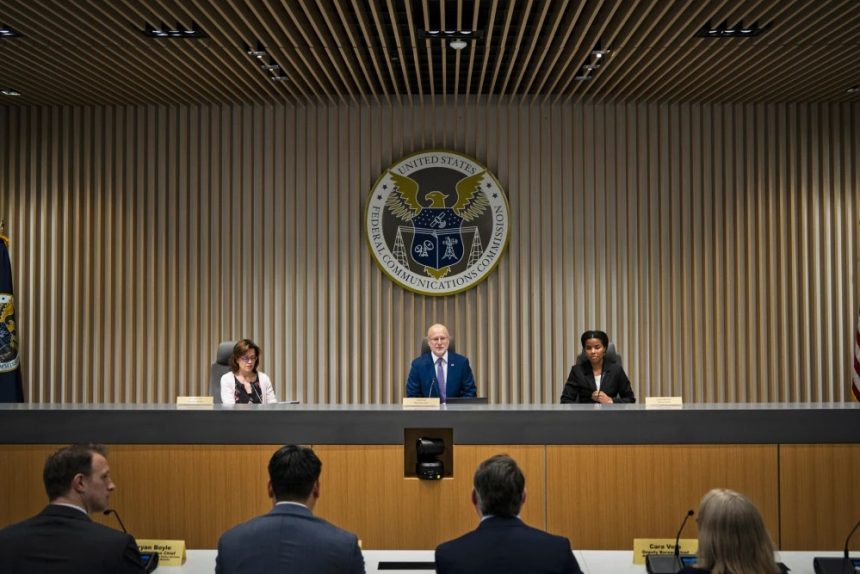
The United States Federal Communications Commission (FCC) has voted to eliminate a long-standing limit on television station ownership, a decision expected to accelerate mergers and acquisitions across the country’s broadcast media industry.
In a 2-1 vote on Thursday, the communications regulator scrapped a 22-year-old rule that prevented any single company from owning television stations reaching more than 39 per cent of U.S. television households.
Under the new policy, ownership proposals will now be assessed on a case-by-case basis rather than being subject to a fixed nationwide cap.

FCC Chairman Brendan Carr, who has described the restriction as outdated, said the change would allow local broadcasters to compete more effectively with digital platforms and streaming services that are not subject to similar ownership limits.
According to Carr, the existing rule no longer reflects the realities of today’s media landscape.
“The cap no longer constrains the power of national programmers. Instead, it prevents local broadcasters from competing on a level playing field,” he said.
The ownership limit had been in place since 2004, when Congress increased the previous cap from 35 per cent to 39 per cent.
Although the rule is enshrined in federal law, Carr has argued that the FCC has the legal authority to repeal it, an interpretation that is expected to face legal challenges.
The commission’s lone Democratic member, Anna Gomez, strongly opposed the decision, describing the vote as unlawful and warning that it could increase media concentration.
She argued that removing the cap would primarily benefit large national media corporations rather than local broadcasters, potentially reducing diversity in ownership and programming.
The decision is widely seen as a boost for Nexstar Media Group, the largest owner of local television stations in the United States.
Nexstar is seeking to acquire rival broadcaster Tegna in a deal valued at approximately $6.2 billion, although the proposed merger is currently on hold following an antitrust lawsuit filed by eight state attorneys general.

If completed, the combined company would reach more than 60 per cent of U.S. television households.
Supporters of the rule change, including major broadcasting companies, argue that ownership restrictions have become obsolete in an era dominated by streaming services, social media platforms and digital content providers.
Critics, however, warn that the move could lead to greater corporate consolidation, job losses, fewer independent broadcasters and reduced diversity of viewpoints in the media.
Several consumer advocacy groups and lawmakers have also questioned whether the FCC has the legal authority to overturn a limit established by Congress, raising the prospect of court challenges to the commission’s decision.