RismadarVoice Reporters
July 30, 2026
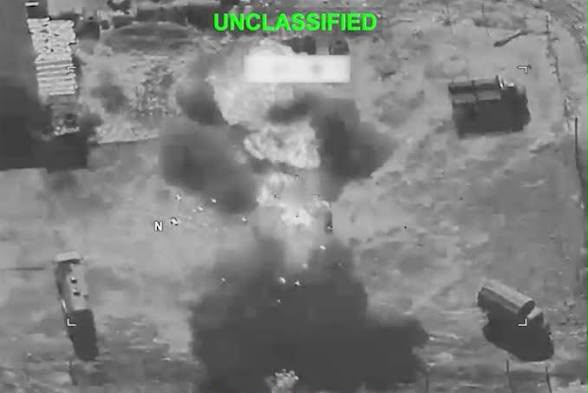
Iran has vowed to retaliate against the United States after American forces launched what the U.S. military described as a “heavy wave of strikes” on multiple Iranian targets, deepening tensions in the Middle East.
The latest escalation followed Iran’s recent attack on a U.S. military base in Jordan, prompting President Donald Trump to promise a forceful response.
The Islamic Revolutionary Guard Corps (IRGC) warned on Thursday that “the aggressor will be punished today,” signalling that further retaliation was imminent.
According to the U.S. Central Command (CENTCOM), American forces carried out coordinated strikes over two hours, targeting dozens of IRGC facilities, including military command centres, missile and drone installations, coastal defence systems and maritime assets.
Iranian media reported explosions in several cities. Authorities said three IRGC personnel were killed in Zanjan Province, while three civilians, including a toddler, died on Qeshm Island near the Strait of Hormuz.
The conflict also appeared to widen across the region. Jordan said it intercepted another wave of Iranian projectiles, while Kuwait reported that an Iranian strike hit a building owned by a Chinese company, killing one worker.

In Egypt, authorities confirmed that drones struck two natural gas vessels at the Mediterranean port of Damietta, igniting fires aboard the ships. Although responsibility for the attack has not been established, the incident has heightened concerns about the security of global energy infrastructure.
Speaking at the White House, President Trump said the United States would respond decisively to Iran’s actions, insisting it was now America’s turn to strike back.
The renewed hostilities have disrupted efforts to revive diplomatic negotiations between Washington and Tehran, ending a brief period of relative calm.
The Strait of Hormuz remains at the centre of the crisis, with commercial shipping continuing under heightened security. The strategic waterway, through which roughly one-fifth of the world’s oil supply normally passes, has experienced reduced traffic following repeated attacks on vessels.

Global energy markets reacted to the latest developments, with Brent crude oil prices climbing to around $90 per barrel amid fears of prolonged instability and potential disruptions to international oil supplies.
Despite the growing tensions, some commercial vessels continued transiting the Strait of Hormuz under close monitoring by security personnel.