RismadarVoice Reporters
October 4, 2026
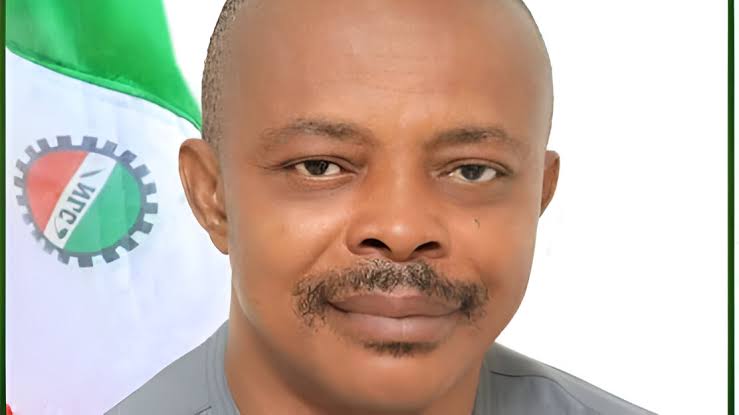
President of the Nigeria Labour Congress (NLC), Joe Ajaero, has said the economic proposals being advanced by Accord Party presidential candidate Gbenga Olawepo-Hashim and Social Democratic Party candidate Adewole Adebayo deserve public attention ahead of the 2027 presidential election.
Ajaero made the remarks during an interview in which he was asked about the economic policies being proposed by former Vice President Atiku Abubakar.
The NLC president said he had examined the positions of Hashim and Adebayo and considered some of their ideas sufficiently different to warrant further engagement.

Ajaero contrasted their positions with those of President Bola Tinubu, Peter Obi and Atiku, arguing that the three politicians broadly subscribe to market-oriented economic policies.
He described Hashim and Adebayo as presenting alternative ideas that should be examined as Nigerians debate the country’s economic direction ahead of the election.
Hashim has increasingly centred his campaign on what he calls an “Energy First” economic agenda, built around lower energy costs, increased domestic production, industrialisation and expansion of Nigeria’s productive capacity.
Under the proposal, Hashim has suggested an initial petrol price target of ₦605 per litre, with a longer-term ambition of bringing the price towards ₦200 to ₦300 per litre.
He argues that such reductions could be pursued through increased crude oil production, expanded domestic refining, lower production and logistics costs, improved efficiency and greater stability in the value of the naira.
Hashim has also proposed raising Nigeria’s crude oil production to at least four million barrels per day within 24 months of an Accord administration. He says increased production should support domestic refining and industrial development rather than serve only to expand crude exports.

The proposals remain campaign commitments and their feasibility, costs and implementation would ultimately depend on economic conditions, government policy, investment and other factors.
Ajaero’s remarks come as economic policy increasingly emerges as a major issue in political discussions ahead of the 2027 presidential election, with candidates presenting competing approaches to fuel pricing, industrialisation, government intervention and economic growth.