RismadarVoice Reporters, May 23, 2026
Kevin Warsh has been sworn in as the new chair of the U.S. Federal Reserve, stepping into office at a time of rising inflation and growing expectations that interest rate cuts are unlikely in the near term, despite political pressure from President Donald Trump.
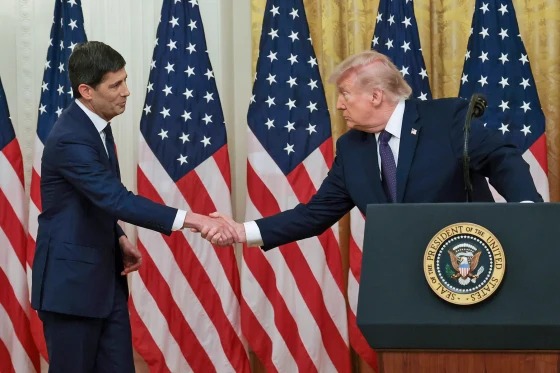
Warsh was formally sworn in on Friday during a White House ceremony held in the East Room, following his confirmation by the Senate in a 54–45 vote earlier this month. The proceedings were presided over by Supreme Court Justice Clarence Thomas, with President Trump delivering lengthy remarks.
The ceremony underscored the unusually visible political backdrop to the transition, highlighting ongoing tensions over the independence of the central bank and its monetary policy direction.

“I want Kevin to be totally independent and just do a great job,” Trump said, while also urging him to “do your own thing,” even as he has repeatedly pushed for lower borrowing costs.
Warsh, a former Fed governor, said in his remarks that improving living standards for Americans would be a key focus of his leadership, adding that the Federal Reserve plays a central role in economic outcomes.
“I will lead a reform-oriented Federal Reserve,” he said, signalling possible changes to the institution’s structure and communication strategy.
However, Warsh assumes office amid shifting economic conditions that are complicating expectations for monetary easing.
Inflation has been trending upward, the labour market is showing signs of strain, and many economists now believe the Federal Reserve is unlikely to cut interest rates in the foreseeable future.
The economic outlook appears to be moving further away from Trump’s long-standing calls for aggressive rate reductions. The president has repeatedly criticised previous Fed leadership and advocated for lower benchmark borrowing rates.
Tensions over monetary policy have also been reflected within the central bank itself, with officials warning that further rate increases cannot be ruled out if inflation persists.
A Trump-appointed Fed governor, Christopher Waller, recently said policymakers may need to signal that both rate cuts and rate hikes remain possible depending on economic data.
Warsh’s appointment comes at a time when external factors are also weighing on inflation, including global energy market disruptions and rising bond yields, which have added pressure to the broader financial system.

Despite political expectations, Warsh has consistently emphasised the importance of central bank independence, including during his Senate confirmation hearing, where he pledged to base decisions on economic data rather than political considerations.
The White House ceremony, however, highlighted lingering uncertainty about how closely aligned the new Fed leadership will be with the administration’s policy preferences.
Trump, who previously selected Warsh as a potential candidate for the role, appeared to temper expectations in recent remarks, saying he would allow the Fed chair to operate independently.
Warsh now takes charge of the Federal Reserve at a critical juncture, with his first Federal Open Market Committee meeting expected in the coming weeks, where policymakers will decide the next direction for U.S. interest rates amid persistent inflation concerns.