

RismadarVoice Reporters
September 24, 2026
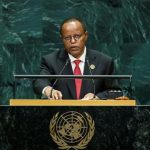
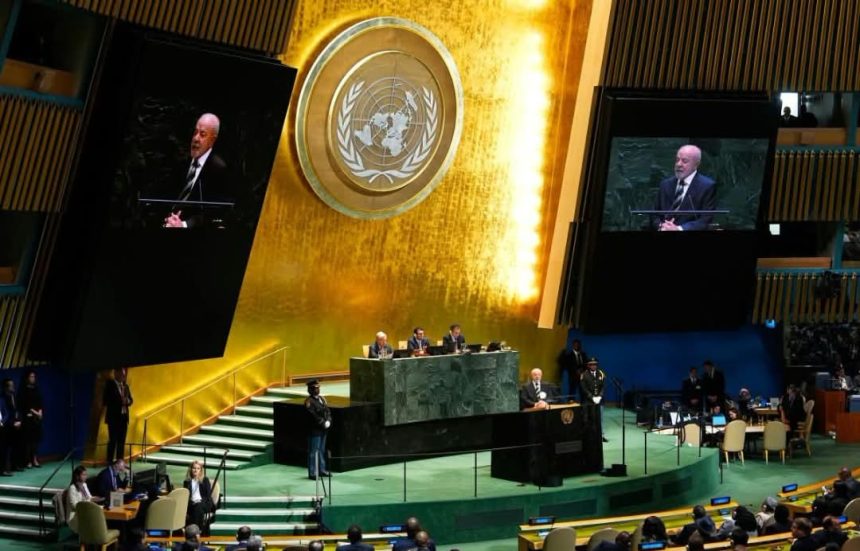
The United Nations faces mounting questions over its funding, effectiveness, and the repeated use of veto powers in the Security Council as world leaders gather in New York for the 81st United Nations General Assembly.
Experts and diplomats have pointed to continuing conflicts in Ukraine, Gaza, Sudan and other regions as evidence of the difficulties confronting the international body, particularly when permanent members of the Security Council disagree.
Daniel Forti, Head of UN Affairs at the International Crisis Group, said many world leaders recognised the organisation’s difficulties but continued to regard it as an important forum for international diplomacy.
“The vast majority of leaders, from small states, from middle powers, and even a few from major powers, recognise the importance of a UN that is a global conversation platform,” Forti said.
The Security Council’s veto system has emerged as a major focus of criticism, with geopolitical divisions repeatedly preventing agreement on some conflicts.

The five permanent members of the council — China, France, Russia, the United Kingdom and the United States — can veto substantive resolutions.
Ukrainian President Volodymyr Zelenskyy, addressing the General Assembly on Wednesday, criticised the use of the veto amid his country’s continuing war with Russia.
“Many of you here have seen more than once how the abuse of the veto at the UN weakens the world and pushes peace further away,” Zelenskyy said.
Alanna O’Malley, Professor of Global Governance and Wealth at Erasmus University, said disagreements among permanent members had limited the UN’s ability to respond effectively to several major conflicts.
“From Ukraine, to Gaza, and Sudan, and also with what’s happening now in Iran, the veto problem leaves the UN hamstrung,” O’Malley said.
Despite the Security Council’s divisions, the General Assembly remains a forum in which all 193 UN member states have representation.
Member states have increasingly explored mechanisms allowing the General Assembly to debate matters stalled at the Security Council.
One such mechanism requires a permanent Security Council member that exercises its veto to appear before the General Assembly and explain its decision.
O’Malley said the procedure was intended to increase political accountability surrounding the use of veto power.
Calls for broader reform of the UN system have also intensified, including demands for changes to the composition and operation of the Security Council.
Another challenge confronting the organisation is the growing tendency of major powers to pursue diplomatic and security initiatives outside traditional UN structures.
Countries have increasingly relied on regional organisations, bilateral negotiations and other international groupings to advance their diplomatic objectives.
UN Secretary-General Antonio Guterres has warned that Security Council divisions are weakening the international system’s ability to respond to major crises.
Guterres has argued that persistent inaction can contribute to what he described as an “environment of impunity,” in which governments may believe they can act without facing meaningful international consequences.
The organisation is also confronting financial pressure as reductions in contributions from major donors affect humanitarian programmes and other operations.
Funding shortages have increased concerns about the UN’s ability to sustain humanitarian assistance in conflict-affected areas while simultaneously managing growing demands on its peace, development and diplomatic operations.

Attention is also turning to the leadership of the organisation, with Guterres’s tenure approaching its conclusion.
His term is scheduled to end on December 31, 2026, placing the selection of his successor among the major issues confronting member states.
Under the selection process, a candidate for secretary-general must secure sufficient support in the 15-member Security Council without being vetoed by any of its five permanent members before being recommended to the General Assembly.
Forti said member states would be looking for a new secretary-general capable of strengthening conflict prevention while navigating the organisation’s financial and institutional pressures.
The debates surrounding the UN’s future are expected to remain prominent throughout the General Assembly as leaders consider conflicts, Security Council reform, financing and the wider role of multilateral institutions in global affairs.