RismadarVoice Reporters
November 10, 2026
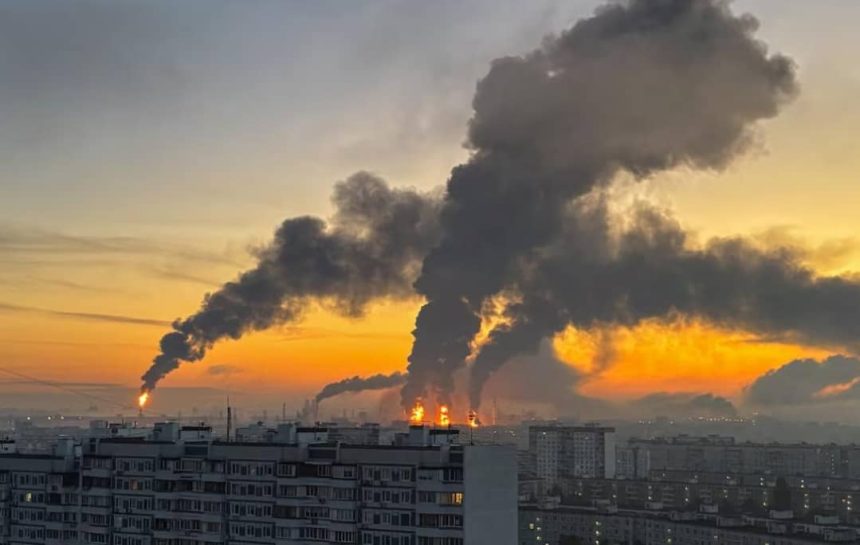
Renewed Ukrainian drone attacks on Russian oil refineries have disrupted facilities accounting for approximately 30 per cent of the country’s total refining capacity, according to industry sources cited by Reuters.
The attacks, which intensified in late October, have affected nine of Russia’s 35 major refineries within the past week, creating additional pressure on Moscow’s domestic fuel supply.
Two industry sources told Reuters on Tuesday that the affected refineries have a combined processing capacity of approximately 300,000 metric tonnes of crude oil daily, equivalent to 2.2 million barrels.
Russia’s total primary refining capacity stands at about 930,000 tonnes per day, while actual crude processing averaged approximately 700,000 tonnes daily at the end of October.
The sources estimated that the attacks could have reduced actual crude processing by as much as 200,000 tonnes per day.
The affected facilities include refineries in Ryazan, Yaroslavl and the Volga region.
On Monday, a Ukrainian drone reportedly struck the Kirishi refinery, Russia’s second-largest oil processing facility, triggering a fire.

The governor of Russia’s Leningrad region confirmed the incident and reported that one woman was killed in the attack.
The renewed strikes have complicated Russia’s efforts to address domestic fuel shortages while maintaining diesel exports to international markets.
The escalation followed the failure of a proposed halt to attacks on energy infrastructure announced by United States President Donald Trump.
Russian Foreign Minister Sergei Lavrov accused Ukraine of disregarding Washington’s calls to stop targeting Russian energy facilities.
Writing in the Russian newspaper Kommersant on Tuesday, Lavrov criticised Kyiv’s continued military operations against the country’s oil sector.
However, Ukrainian President Volodymyr Zelenskyy defended the strikes, describing them as a response to Russia’s repeated attacks on Ukrainian energy infrastructure.
Zelenskyy said Ukrainian electricity networks, heating facilities, power plants and water supply systems had remained under sustained Russian attacks.
He also accused Moscow of rejecting proposed measures intended to reduce attacks on energy facilities.

The developments highlight the growing importance of energy infrastructure in the continuing conflict between Russia and Ukraine.
Although the affected refineries represent approximately 30 per cent of Russia’s installed refining capacity, the figure does not mean that the country’s actual oil processing has declined by the same proportion.
The full extent of operational damage and the time required to restore affected facilities remain uncertain.