RismadarVoice Reporters, June 22, 2026
British Prime Minister, Keir Starmer has announced his decision to step down, bringing an end to his leadership and setting the stage for the United Kingdom to welcome its seventh prime minister in just ten years.
Starmer announced on Monday after months of mounting criticism within the governing Labour Party.
The pressure intensified following the return of former Greater Manchester Mayor Andy Burnham to Parliament, a development widely viewed as a challenge to Starmer’s authority and leadership.

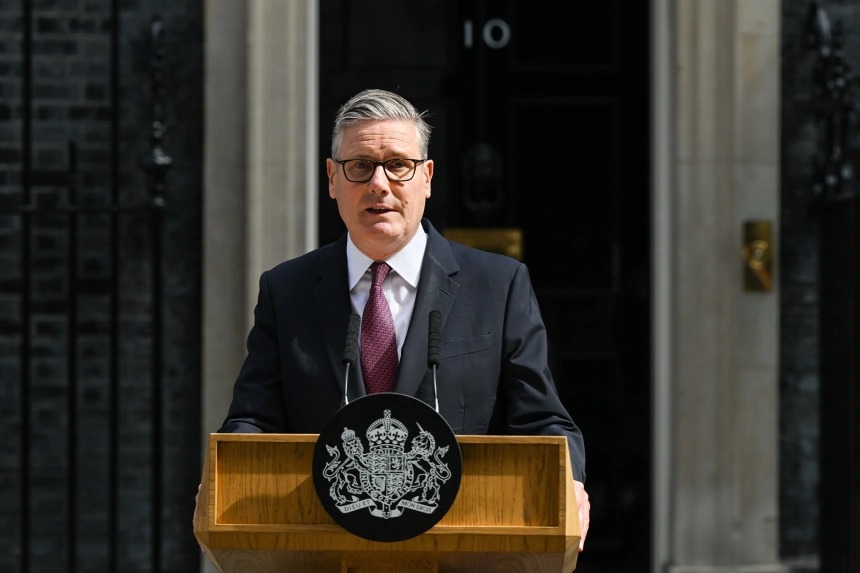
Speaking outside 10 Downing Street, the prime minister said he had informed King Charles III of his intention to resign but would remain in office in a caretaker capacity until a new Labour leader is elected.
“The question facing my party is whether I am the right person to lead it into the next general election,” Starmer said. “I have listened to my parliamentary colleagues and accepted their judgment.”
The outgoing prime minister became emotional while thanking his wife, Victoria, and their children for their support throughout his political career. He maintained that every major decision taken during his time in office had been guided by what he believed was in the country’s best interest.
Labour Party officials confirmed that nominations for the leadership contest will open on July 9. If more than one candidate secures the required support, party members will vote to determine Starmer’s successor, with the process expected to conclude by September.
Starmer’s resignation marks a remarkable reversal of fortune for a leader who secured a landslide general election victory in 2024, ending 14 years of Conservative rule and raising hopes of political renewal.

Before confirming his departure, Starmer highlighted achievements of his administration, including economic growth, wage improvements, expanded workers’ rights, increased defence spending, and anti-poverty initiatives aimed at supporting vulnerable families.
However, his government was increasingly weakened by internal divisions, policy disputes, and a series of controversies that eroded support among both lawmakers and voters.
Labour’s disappointing performance in recent local elections further intensified calls for change, especially as Nigel Farage’s Reform UK made significant electoral gains across several regions.
Attention has now shifted to Andy Burnham, who is widely regarded as the favourite to replace Starmer. Burnham recently won a parliamentary by-election, strengthening his position within the party and enhancing his national profile.
Often referred to as the “King of the North” because of his advocacy for northern England, Burnham has presented himself as a candidate capable of reconnecting Labour with voters and reversing the party’s declining popularity.
Following his election victory, Burnham described the moment as an opportunity to restore public confidence in politics and deliver meaningful change.
Political analysts believe his strong communication skills and broad appeal among Labour supporters place him in a commanding position ahead of any leadership contest.
Starmer’s authority had been undermined by a series of high-profile resignations within his Cabinet. Disagreements over health policy, defence spending, and economic priorities exposed growing tensions within the government.
His administration also faced criticism over several policy initiatives that were either scaled back or abandoned altogether, including ambitious environmental programmes and plans for digital identification systems.
Adding to the difficulties were questions surrounding the appointment of senior political figures and concerns over government decision-making processes. Critics argued that the administration struggled to establish a clear and consistent political message capable of maintaining public support.
Political observers suggest that while Starmer inherited significant economic challenges, including sluggish growth and the long-term effects of Brexit, his government failed to articulate a compelling vision that resonated with voters.
Despite domestic setbacks, Starmer earned recognition for his handling of several international issues and was often viewed as a strong presence on the global stage.
His approach to foreign policy and international diplomacy won praise from allies, even as his standing at home declined.