RismadarVoice Reporters
October 14, 2026
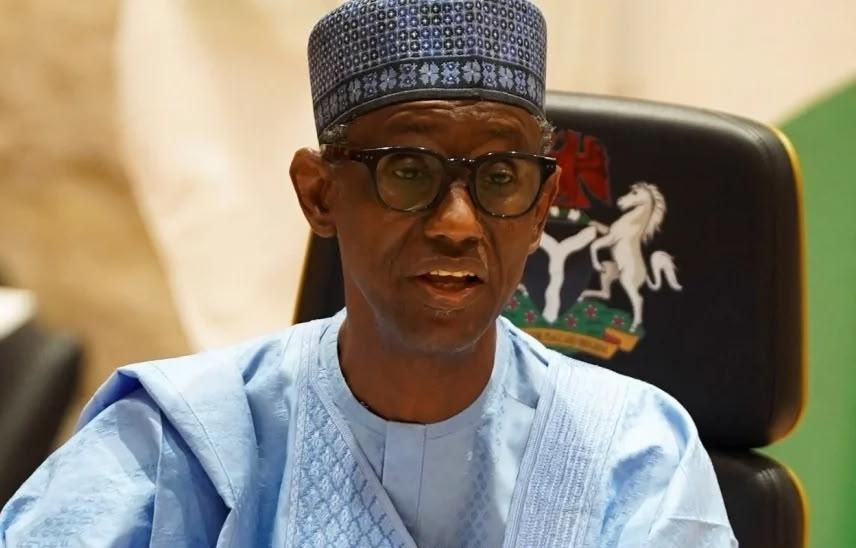
National Security Adviser, Nuhu Ribadu, has warned that terrorist organisations are increasingly exploiting artificial intelligence, cryptocurrencies and digital communication platforms to evade security agencies, finance their activities and expand operations across West Africa and the Sahel.
Ribadu raised the concern at a three-day regional training conference in Abuja aimed at strengthening the capacity of security personnel to detect and counter the misuse of information and communication technologies by terrorist groups.
Represented by the National Coordinator of the National Counter Terrorism Centre (NCTC), Major General Adamu Laka, the NSA said technological advancements had created new challenges for counterterrorism operations.
He explained that extremist organisations were increasingly using digital platforms to spread propaganda, recruit members, mobilise financial resources and coordinate activities across national borders.
According to Ribadu, artificial intelligence has made it easier to generate targeted content, while virtual assets have introduced additional challenges for authorities investigating terrorist financing.

He also identified drones and autonomous technologies as emerging security concerns requiring improved surveillance, intelligence gathering and institutional preparedness.
The NSA stressed that responding effectively to these threats would require more than acquiring advanced equipment.
He called for investment in specialised personnel, stronger intelligence institutions and improved cooperation among security agencies.
Ribadu emphasised the importance of timely intelligence sharing among West African and Sahelian countries, noting that terrorism and other transnational security threats could not be addressed effectively by individual countries acting alone.
He further disclosed that Nigeria was collaborating with the African Union Counter-Terrorism Centre to secure accreditation for the NCTC as a regional centre of excellence for counterterrorism.
According to him, the initiative followed President Bola Tinubu’s commitment at the High-Level Africa Counterterrorism Summit in April 2024 to strengthen regional security cooperation.
Also speaking, the Acting Director of the African Union Counter-Terrorism Centre, Idriss Lalalli, expressed concern over the increasing use of digital technologies by terrorist organisations operating across the region.
He identified the Islamic State West Africa Province (ISWAP), Boko Haram and Jama’at Nusrat al-Islam wal-Muslimin (JNIM) among groups exploiting technological developments to support their activities.
Lalalli said extremist organisations were using social media to recruit supporters and spread propaganda, while digital financial services and cryptocurrencies presented additional challenges for investigators tracking suspicious transactions.
He also raised concerns about the use of satellite communications, drones and artificial intelligence by terrorist networks.
According to him, the accessibility and speed of emerging technologies have increased the pressure on security institutions to develop stronger technical capabilities.

Lalalli said the regional conference was designed to equip participants with practical knowledge in cyber threat intelligence, open-source intelligence, digital forensics and blockchain analysis.
He explained that the training would strengthen the ability of security personnel to identify suspected online recruitment networks, preserve electronic evidence and investigate financial transactions potentially linked to terrorism.
The AU official stressed that these capabilities should support criminal investigations and prosecutions while improving coordination among relevant institutions.
He also advocated stronger partnerships between governments, telecommunications operators, technology companies and financial institutions to address the exploitation of digital infrastructure by criminal and extremist organisations.
Lalalli described participants as the first cohort of trainers under the specialised regional initiative and encouraged them to transfer the knowledge acquired to other security personnel in their respective countries.
The conference brought together representatives of West African and Sahelian countries, the African Union, the Economic Community of West African States, the Multinational Joint Task Force, regional intelligence institutions and international organisations.
The engagement forms part of broader efforts to strengthen regional cooperation and improve the capacity of security agencies to respond to technology-related terrorism threats.