RismadarVoice Reporters
October 26, 2026
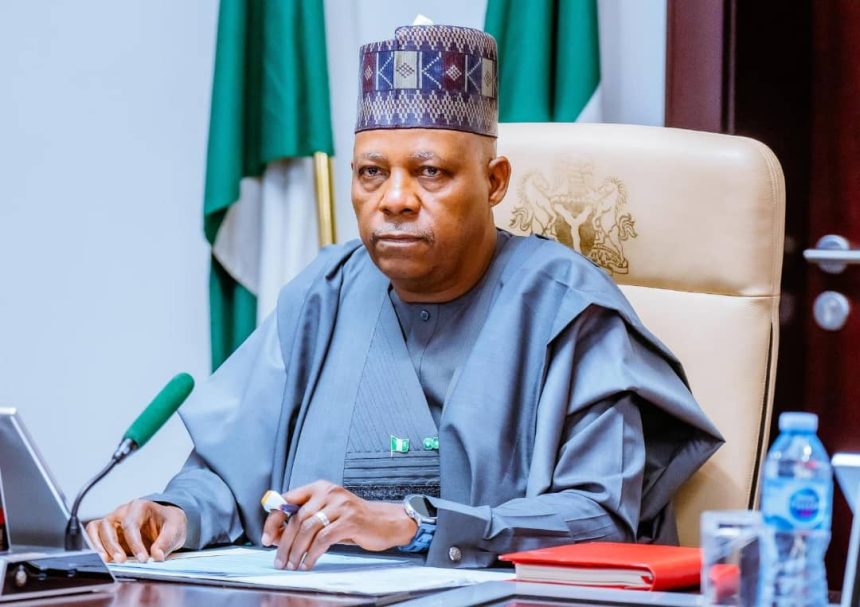
Vice-President Kashim Shettima has criticised Peter Obi, the presidential candidate of the Nigeria Democratic Congress (NDC), accusing him of relying on questionable economic statistics and offering inadequate solutions to Nigeria’s economic challenges.
Shettima made the remarks on Monday at the 32nd Nigerian Economic Summit in Abuja, where he defended President Bola Tinubu’s economic reforms, particularly the removal of the petrol subsidy.
The Vice-President acknowledged Obi’s opposition to restoring the subsidy but questioned the substance of his broader economic proposals.

“I respect Peter Obi for having the courage to say he’s not going to restore the petrol subsidy, but beyond spouting some dubious statistics, Mr Obi has absolutely nothing to offer,” Shettima said.
He urged members of Nigeria’s economic community to support the Federal Government’s reform agenda, arguing that reversing the subsidy removal would undermine efforts to stabilise public finances.
Shettima also compared petrol prices in Nigeria with those in neighbouring countries, including Niger, Benin and Cameroon, to defend the government’s position on fuel pricing.
According to him, Nigeria’s previous subsidy arrangement had created opportunities for neighbouring countries to benefit from comparatively cheaper petroleum products.
The remarks followed an earlier exchange between Shettima and Obi over the use of international economic comparisons in formulating domestic policies.
Speaking at the inauguration of the All Progressives Congress Presidential Campaign Council on October 14, Shettima questioned Obi’s frequent references to Bangladesh as an example of economic development.
He argued that policies successful in one country could not automatically be transferred to another without considering differences in population, institutions and economic structures.
The Vice-President also challenged Obi’s assertions about the outcome of the 2023 presidential election, accusing him of making claims without sufficient evidence.
However, Obi’s political allies have disputed Shettima’s criticism.
Rabiu Kwankwaso, the NDC vice-presidential candidate, previously defended Obi’s use of economic statistics, maintaining that many of the figures he cited were accurate.

The disagreement reflects wider political debate over Nigeria’s economic direction as parties prepare for the 2027 general election.
While the Tinubu administration maintains that subsidy removal and other reforms are necessary for long-term economic stability, opposition figures have continued to question their implementation and impact on household welfare.
The 32nd Nigerian Economic Summit, scheduled for October 26 and 27, brings together government officials, business leaders and economic experts to discuss employment, productivity and shared prosperity.