RismadarVoice Reporters
November 16, 2026
Russia’s proposals for a new European security framework have raised concerns among European leaders as United States-mediated negotiations to end the war in Ukraine remain deadlocked over territorial disputes and security guarantees.
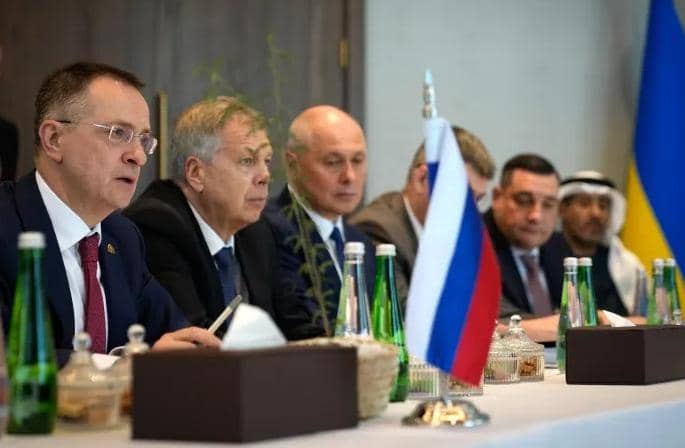
The latest round of talks, held in Abu Dhabi, United Arab Emirates, on November 10 and 11, brought together representatives of Russia, Ukraine and the United States.
Although negotiators reached an agreement in principle on a major prisoner exchange, they failed to secure a breakthrough on a ceasefire or the central political issues surrounding the conflict.
Russia’s chief negotiator, Vladimir Medinsky, said discussions on Europe’s future security arrangements formed a major part of the negotiations.
Separately, senior Russian Foreign Ministry official Alexey Drobinin proposed several possible arrangements, including bilateral non-aggression agreements between Moscow and individual NATO member states.

Under the proposal, participating countries could receive additional security assurances from Russia.
However, the suggestion has raised concerns about its potential implications for NATO’s collective defence framework, which is built around the principle that an armed attack against one member is considered an attack against all.
Some European officials argue that negotiations over the continent’s broader security architecture should not proceed before meaningful progress is achieved towards ending the war in Ukraine.
European Union foreign ministers reiterated that position on Monday, warning that wider security discussions with Moscow would be premature without a ceasefire and substantive Russian concessions.
Ukrainian President Volodymyr Zelenskyy has also maintained that European security arrangements cannot be determined without the participation of European countries.
The Abu Dhabi negotiations involved US special envoy Steve Witkoff and President Donald Trump’s son-in-law, Jared Kushner, alongside Russian and Ukrainian representatives.
Kushner acknowledged the difficulty of the discussions but indicated that progress had been made on aspects of a possible post-war security framework.

Ukrainian negotiator Davyd Arakhamia described the meetings as particularly difficult, saying the Russian delegation appeared to be operating under strict instructions.
Nevertheless, he expressed hope that further negotiations could produce progress before the end of the year.
European governments remain concerned about the consequences of any agreement that could weaken existing security commitments or leave Ukraine vulnerable to renewed attacks.
The latest diplomatic developments underline the continuing disagreements over territory, security guarantees and Europe’s role in determining the terms of a possible settlement.
Further negotiations are expected, but no comprehensive peace agreement has been announced.