RismadarVoice Reporters
August 24, 2026
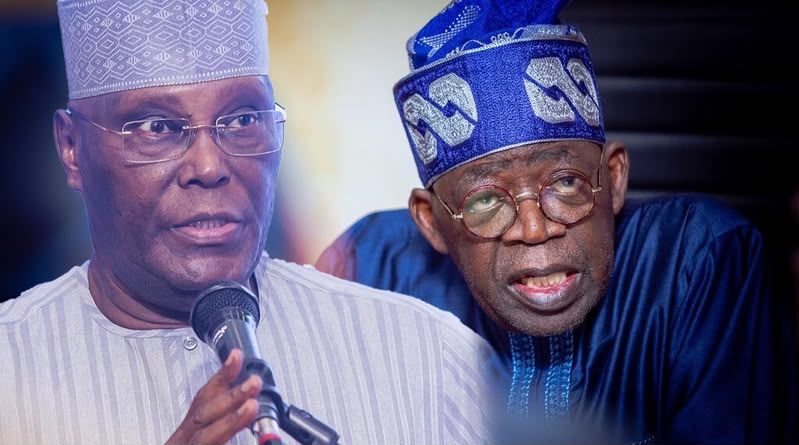
Former Vice President Atiku Abubakar and the Presidency have clashed over the removal of Nigeria’s petrol subsidy, with Atiku insisting that he would restore a targeted subsidy if elected, while the Federal Government accused him of reversing his previous position for political reasons.
Atiku, through his Senior Special Assistant on Public Communication, Phrank Shaibu, argued that despite President Bola Tinubu’s declaration that the subsidy had been abolished, government accounts showed that public funds were still being used to absorb petrol price differentials.
Atiku based his argument on audited accounts of the Nigerian National Petroleum Company Limited (NNPCL), citing approximately N4.84 trillion recorded as energy-security expenses and related shortfalls in 2023 and about N7.13 trillion under energy-security expenses in 2024.

According to him, NNPCL explained that part of the expense arose from the difference between the exchange rate used in determining the regulated PMS ex-coastal price and the prevailing exchange rate when import obligations were settled.
He argued that the terminology used by government did not change the underlying economic reality.
“Nigerians do not eat semantics. Whether government calls it subsidy, under-recovery, shortfall or energy security, public resources were being used to bridge a gap between economic cost and the price at which petrol was sold.”
Atiku maintained that government could not claim to have completely abolished subsidy while continuing to absorb costs associated with keeping petrol prices below market-related levels.
The former vice president also pointed to incentives under the Deep Offshore Oil and Gas Projects Incentives framework, under which qualifying petroleum projects could receive production tax credits beginning at $3 and $4.50 per barrel.

He argued that the government was willing to intervene in the market when the beneficiaries were major oil investors but rejected similar intervention to cushion the impact of high petrol prices on ordinary Nigerians.
“The government can protect a multi-billion-dollar oil investment from risk, yet it says protecting the Nigerian worker from crushing hardship is bad economics.”
Atiku reiterated his intention to introduce a targeted fuel subsidy if elected, arguing that the policy would provide relief to Nigerians facing rising transportation, food and household costs.
Responding, the President’s Special Adviser on Media and Public Communications, Sunday Dare, accused Atiku of politicising the economy and reversing his position on fuel subsidy ahead of the 2027 election.
In a statement titled “Atiku’s Subsidy U-Turn: The Bankruptcy of Desperate Ambition,” Dare recalled that Atiku had during the 2023 presidential campaign advocated the removal of petrol subsidy, describing the existing regime as unsustainable, opaque and vulnerable to corruption.
Dare said Atiku’s current position represented a major departure from the economic position he previously promoted.
“To watch a self-styled statesman, who less than four years ago cast himself as an uncompromising apostle of market-driven reform, scramble to promise the reintroduction of petrol subsidies is nothing short of political apostasy.”

The Presidency argued that Atiku had previously described subsidy removal as necessary to prevent public resources from being diverted through a corrupt and inefficient system.
Dare said the former vice president was now attempting to exploit Nigerians’ economic difficulties for political advantage as the 2027 elections approach.
The dispute highlights a growing political divide over the future of Nigeria’s petrol pricing policy.
Atiku says targeted government intervention is necessary to protect households from the consequences of high fuel prices, while the Presidency maintains that returning to the subsidy regime would undermine fiscal sustainability and reverse economic reforms.