RismadarVoice Reporters, May 25, 2026
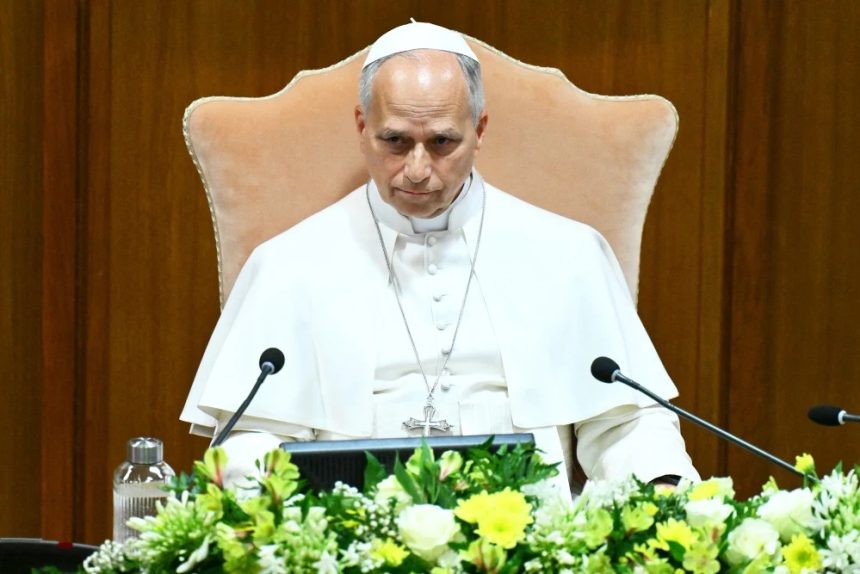
Pope Leo XIV has issued a historic apology acknowledging the Holy See’s role in historically legitimising slavery, describing it as a “wound in Christian memory.”
The apology was contained in his first encyclical, “Magnifica Humanitas” (Magnificent Humanity), released on Monday. In the document, the first U.S.-born pope addressed centuries of church history, including papal actions that contributed to the justification and expansion of slavery during the colonial era.

Pope Leo XIV, whose family background reportedly includes both enslaved individuals and slave owners, expressed deep sorrow over the suffering caused by slavery and the Church’s delayed condemnation of the practice.
“It is impossible not to feel deep sorrow when contemplating the immense suffering and humiliation endured by so many in stark contrast to their immeasurable dignity as persons infinitely loved by the Lord,” the Pope wrote. “For this, in the name of the Church, I sincerely ask for pardon.”
The encyclical also revisited historical papal bulls issued in the 15th century, including Dum Diversas (1452) and Romanus Pontifex (1455), which granted European monarchs authority to conquer and enslave non-Christians. These documents later formed part of what became known as the Doctrine of Discovery, used to justify colonial expansion.
While previous pontiffs have apologised for Christians’ involvement in the trans-Atlantic slave trade, Pope Leo XIV’s statement marks the first time a pope has directly acknowledged and apologised for the Vatican’s institutional role in legitimising slavery.
The Pope noted that although the Church has always upheld human dignity in its teachings, it took centuries to fully denounce slavery as incompatible with Christian doctrine.
“This constitutes a wound in Christian memory, one from which we cannot consider ourselves detached,” he stated.

He further urged the modern Church to confront emerging forms of exploitation, warning that technological advancement must not give rise to “new forms of slavery” linked to global inequality and the digital economy.
Pope Leo XIV also emphasised that while historical decisions must be viewed within their context, the Church cannot ignore its delayed moral response to slavery.
The encyclical has drawn global attention as a significant moment in Catholic Church history, with renewed discussions about colonial-era doctrines and their lasting impact on societies worldwide.