RismadarVoice Reporters
September 25, 2026
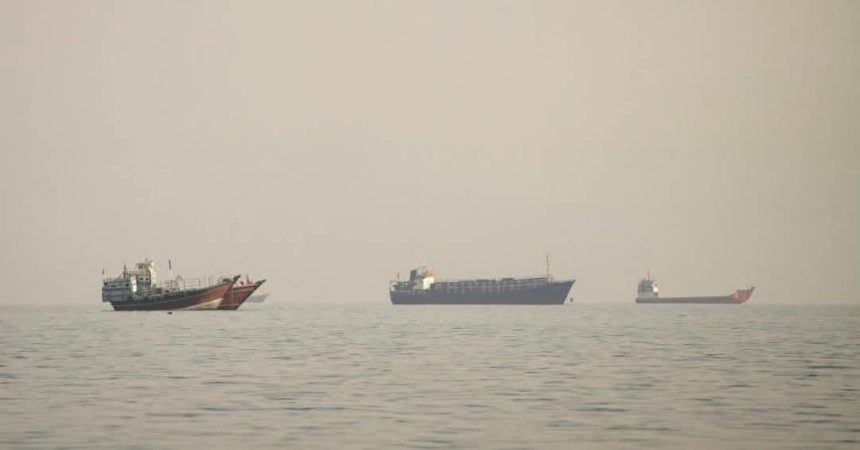
Ship-to-ship oil transfers in the Gulf of Oman have reached capacity as a sharp increase in Saudi Arabian crude exports through the Strait of Hormuz strains tanker availability and drives shipping costs to record levels.
Saudi Arabia has significantly increased crude shipments through Hormuz after an attack on its East-West Pipeline on September 13 disrupted exports through the Red Sea port of Yanbu.
Saudi crude exports through Hormuz are projected to reach about 3.6 million barrels per day in September, compared with roughly 900,000 barrels per day in August, according to shipping data.
The surge means millions of additional barrels must be moved through the waterway before being transferred between vessels outside the strait, increasing demand for Very Large Crude Carriers (VLCCs).
Industry estimates indicate that between 36 and 40 additional VLCCs could be required to handle the increased Saudi volumes. A typical VLCC can carry about two million barrels of crude.
The pressure on available vessels has pushed shipping costs sharply higher. The daily charter rate for a VLCC carrying crude from the Middle East to China climbed to a record $1.27 million earlier this week.

Saudi Arabia has sold more than 60 million barrels of crude scheduled for ship-to-ship transfers off Sohar, Oman, covering shipments this month and next.
The additional Saudi volumes are competing for transfer capacity with crude from other major Gulf producers, including Iraq and the United Arab Emirates.
The growing traffic has created queues for tugboats, workers and other services required to conduct ship-to-ship operations.
Crude volumes loaded onto VLCCs from ports west of Hormuz have remained around six million barrels per day since late August, equivalent to roughly three pairs of VLCCs beginning transfer operations each day.
Congestion has also increased the time required to complete transfers. Operations that previously took about five to seven days are now taking nearly 10 days in some cases.
The delays are prompting Asian buyers to explore alternative transfer locations, including waters off western India and Malaysia, while some cargoes are being considered for direct delivery to refineries.
One Saudi crude carrier loaded with about two million barrels from Ras Tanura was heading directly to Quanzhou in eastern China.
Some South Korean-bound cargoes are also expected to undergo transfers off Vadinar on India’s western coast, while increased crude-transfer activity has been observed around Malaysia’s Linggi transhipment hub.
Industry participants are also considering transferring crude from supertankers into smaller vessels for onward transportation to North Asian markets.
The disruption has increased the number of tankers required to move Gulf crude and extended voyage times, adding further pressure to global oil transportation costs as uncertainty surrounding shipping routes in the region persists.