RismadarVoice Reporters
September 23, 2026
Nigeria recorded more than 18.8 million domestic and international passenger movements in 2025, representing an 11.9 per cent year-on-year increase and ranking the country as Africa’s fourth-largest aviation market, according to the Federal Airports Authority of Nigeria.
Managing Director and Chief Executive Officer of FAAN, Olubunmi Onabanjo-Kuku, disclosed the figures while delivering a welcome address at the ACI Africa Regional Conference and Exhibition 2026 in Abuja.
Onabanjo-Kuku, who spoke in her capacity as Vice-President of Airports Council International Africa, said the 18.8 million figure represented the combined volume of domestic and international passenger traffic recorded in Nigeria during 2025.
She said the figure was 11.9 per cent higher than the corresponding passenger traffic recorded in the previous year.
The conference, themed “Next-Gen Airports: Driving Performance and Resilience,” brought together airport executives, aviation regulators, financiers, technology providers and other industry stakeholders.

Citing industry data, Onabanjo-Kuku said international passenger demand among African airlines increased by 6.4 per cent year-on-year in July 2026, compared with a 0.1 per cent decline globally during the same period.
Overall passenger demand in Africa increased by 5.2 per cent during the period, she added.
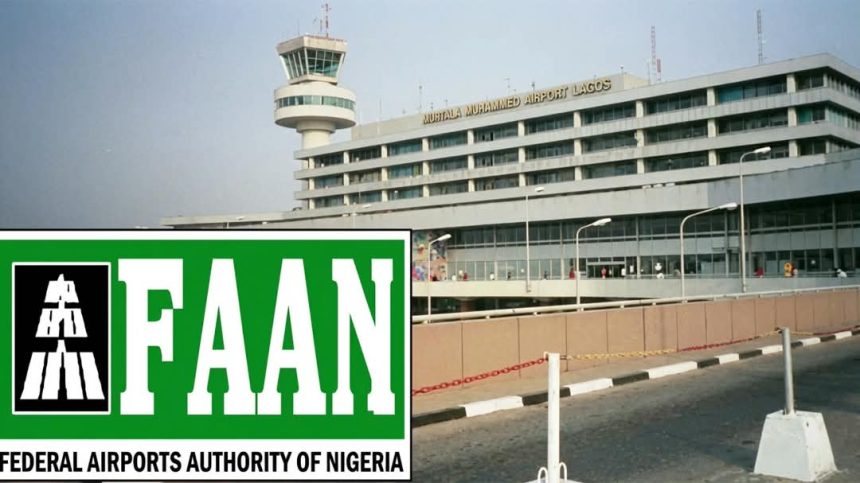
Onabanjo-Kuku also said Murtala Muhammed International Airport in Lagos recorded a 24.1 per cent increase in scheduled seat capacity in September, which she described as the fastest growth among Africa’s 10 largest airports.
Nigeria’s total scheduled airline capacity for the month stood at 1.19 million seats, representing a 37.4 per cent increase compared with the corresponding period of the previous year.
She attributed the expansion partly to currency reforms, new aircraft leasing arrangements and increased confidence among international airlines.
Despite the growth, Onabanjo-Kuku said significant challenges remained across African aviation, noting that the continent accounts for only about one per cent of global air traffic.
She identified funding constraints, infrastructure deficits, high operating costs, fragmented connectivity and the challenge of maintaining affordable airport charges while developing modern facilities among the issues confronting the sector.
The FAAN chief said the authority had concentrated on improving safety, airport capacity and infrastructure while pursuing digital transformation.
She cited runway rehabilitation, terminal upgrades and improvements to airfield lighting among infrastructure interventions undertaken by the authority.
According to her, FAAN is also deploying digital systems including faster check-in processes, automated e-passport gates, enhanced security systems and passenger-data analytics.
She said FAAN obtained ISO 9001:2015 and ISO 14001:2015 certifications in January 2026 and that more than 3,500 personnel had undergone training and certification through International Civil Aviation Organisation and Airports Council International programmes.

Also speaking at the conference, Minister of Aviation and Aerospace Development Festus Keyamo said the development of next-generation airports should focus on resilience, safety, efficiency, financial sustainability and technology.
Keyamo said airports must be capable of responding to disruptions including pandemics, geopolitical tensions, economic shocks, climate events, cyber threats and infrastructure failures.
The minister also cited Nigeria’s 91.45 per cent Effective Implementation score following the 2026 ICAO Coordinated Validation Mission.
He said the Federal Government was encouraging greater private-sector participation in airport infrastructure and services, including Maintenance, Repair and Overhaul facilities, aircraft leasing and cargo infrastructure.
Keyamo also called for stronger air connectivity within Africa, saying improved links between African cities remained important to the continent’s aviation development.