RismadarVoice Reporters, September 2, 2026
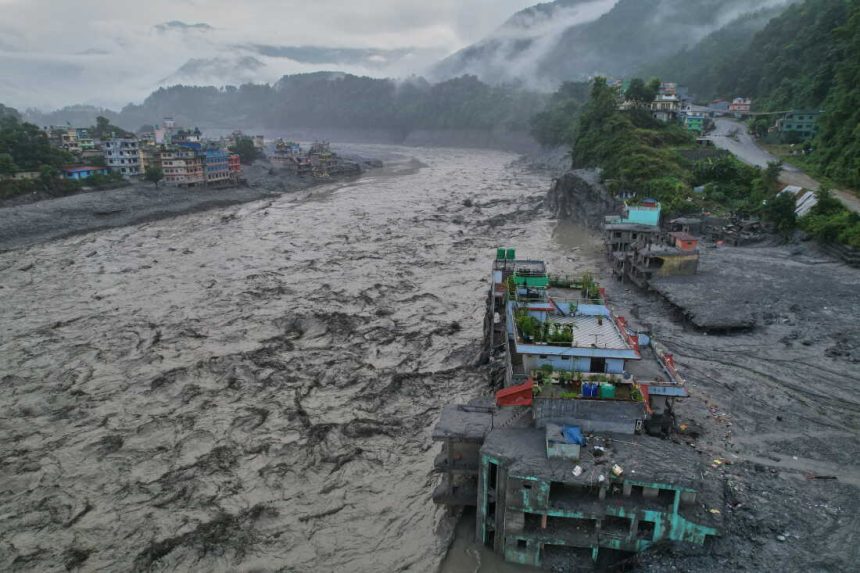
The death toll from last week’s devastating floods and landslides in Nepal has surpassed 1,000, while rescuers face mounting difficulties reaching isolated communities and recovering thousands of people still reported missing.
In Bidur, one of the worst-hit areas in Nuwakot district, the scale of the disaster has become increasingly evident as authorities recover bodies from floodwaters and debris.

Helicopters continue to deliver emergency supplies and evacuate survivors, while heavy machinery is being used to prepare burial sites for unidentified victims.
The stench of decomposing bodies has also deepened fears that the chances of finding more survivors are rapidly diminishing.
Among those desperately searching for missing relatives is 35-year-old nurse Kalpana Shrestha, whose two sisters and their three children are among 10 members of her family still unaccounted for.
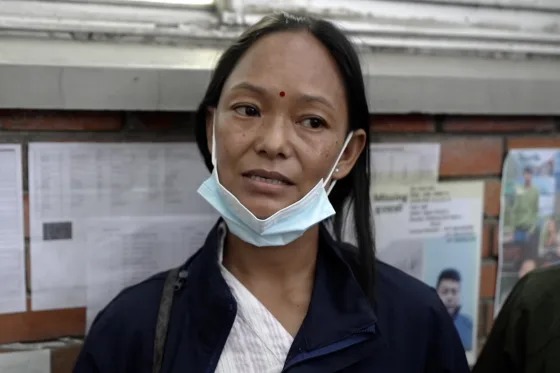
Kalpana Shrestha
Shrestha said she had circulated photographs of her relatives through social media, YouTube and the media in the hope of receiving information about their whereabouts.
She said her family members disappeared in Betrawati, a community about 60 miles from Kathmandu that was severely devastated by the flooding.
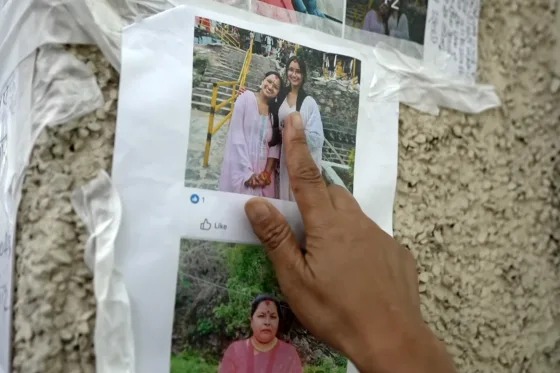
A poster featuring Shrestha’s missing family members
“I have posted so much that my fingers started shaking and trembling,” Shrestha said, adding that despite the emotional strain, her family had continued efforts to locate the missing relatives.
According to Nepal’s National Disaster Risk Reduction and Management Authority, more than 1,000 people have now been confirmed dead, while over 3,900 remain missing. At least 583 foreign nationals are among those still unaccounted for.
In neighbouring Tibet, at least 16 people have also been reported dead, with hundreds more missing, according to Chinese state broadcaster CGTN.
The United Nations said more than 10,000 people had been rescued in Nepal, including 252 foreign nationals.
The United States State Department also said Tuesday that 75 Americans remained unaccounted for, while 14 others had reached safety.
The disaster, triggered by a glacier collapse and landslide along Nepal’s border with China, has become the country’s deadliest natural disaster since the 2015 earthquake that claimed about 9,000 lives.
Poor access to affected communities remains one of the biggest challenges facing rescue teams.

According to the United Nations Office for the Coordination of Humanitarian Affairs, roads are largely passable only as far as Nuwakot, while portions of the highway connecting Kathmandu to badly affected areas remain blocked.
Shrestha said attempts by her brothers to reach the village where her relatives were believed to be had failed because the roads had been destroyed.
“Our brothers did try but failed to reach them and had to return home,” she said. “The road is gone. There is no access at all.”
Authorities are also facing a growing challenge in handling recovered bodies. Nepal’s disaster management agency said at least 21 hospitals across several districts were being used to store remains.
Some unidentified bodies have been buried to reduce public health risks, with authorities collecting DNA samples and documenting photographs to assist future identification.
In Pokhara, police superintendent Nabin Karki said relatives of missing people could provide blood samples for DNA testing. Where a match is established, authorities would exhume the remains and release them to the identified family for burial.
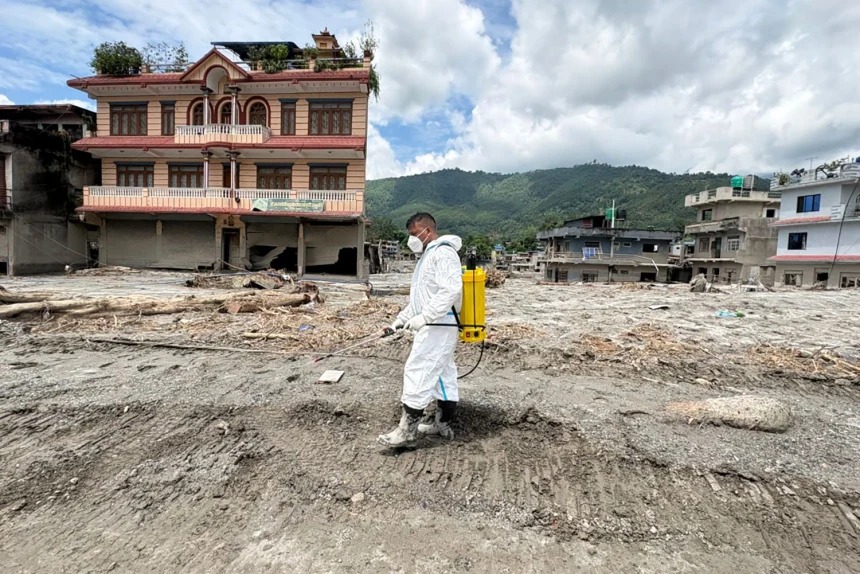
Worker in white hazmat suits in Bidur, in Nepal’s Nuwakot district, on Tuesday.
The search has also become increasingly desperate for tourists caught in the disaster.
Khularam Thing, a 41-year-old guide with Kailash Journeys, said he had been visiting the military staging area daily to check lists of rescued survivors.
One of the company’s groups was reportedly near the China border while travelling toward Mount Kailash in Tibet. The group comprised 31 tourists, including several Americans, along with five staff members.
Thing said the scale of the flooding had left him with little hope that the group would be found alive.